Helene Fischer: 360° Stadium Tour 2026

Impressive audio with Spectera wideband wireless
Wedemark, September 2026 – After taking a break, German superstar Helene Fischer made a sensational comeback in 2026: She celebrated her 20th anniversary on stage, her new single rocketed to No. 1 on the Official German Charts and became MagentaTV’s World Cup anthem, and her 360° Stadium Tour 2026 thrilled 750,000 concertgoers in Germany, Austria, the Netherlands, and Switzerland. The Sennheiser Spectera ecosystem played a key role in the tour’s extensive wireless setup: Four Spectera Base Stations, three prototype handheld transmitters, 70 SEK bodypacks, and ten DAD antennas ensured reliable transmission and excellent audio quality.
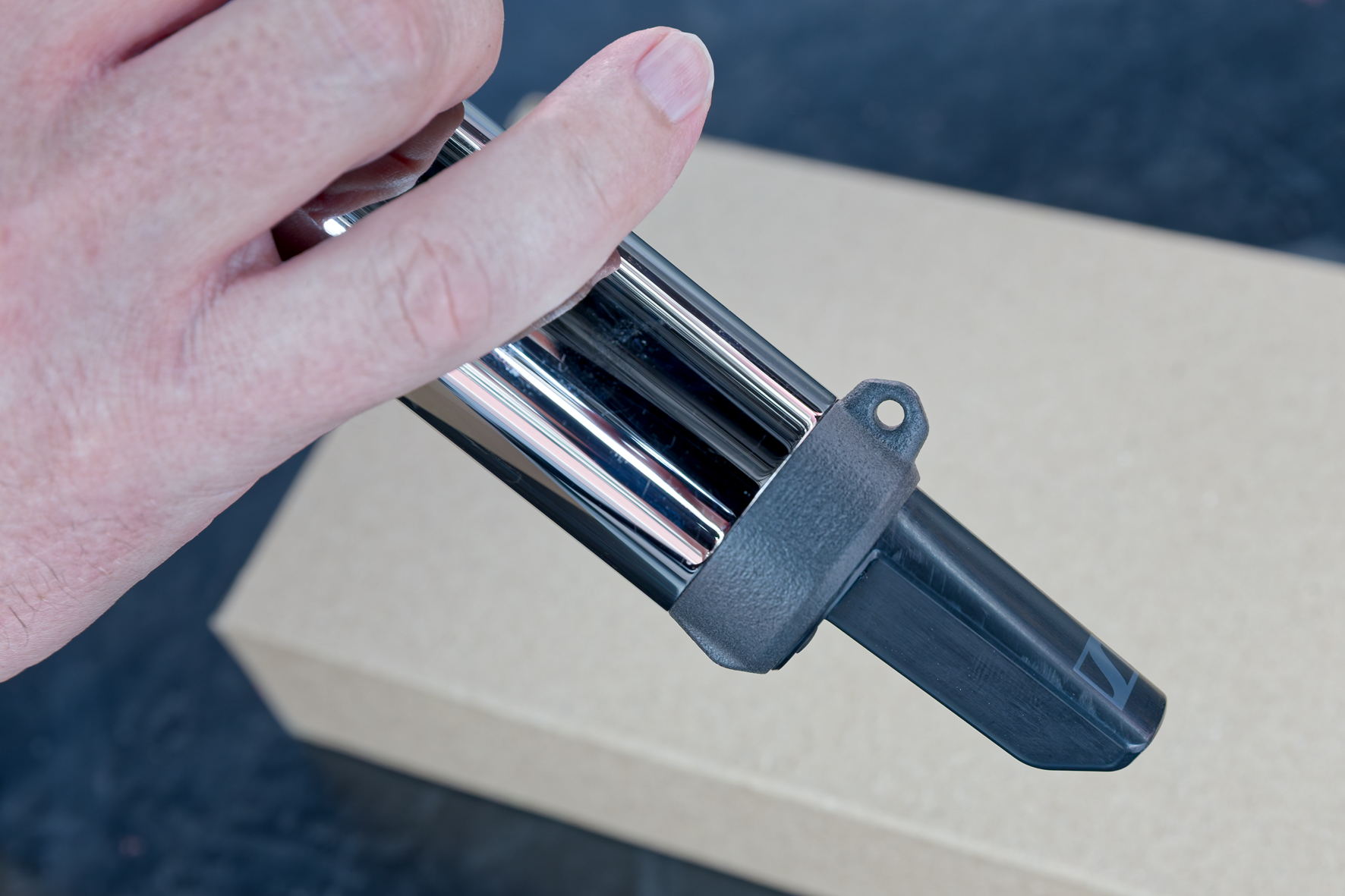
On a tour of this magnitude, nothing is left to chance when it comes to audio, especially in view of the impressive centre stage and the breathtaking acrobatic elements of the show. Helene Fischer used various microphone solutions: her custom gold-finish Sennheiser SKM 6000 handheld transmitter, a Spectera SEK bodypack with simultaneous mic and IEM transmission, and, last but not least, prototypes of the Spectera handheld transmitter, which had been customised in gold, silver, and platinum. The two latter handhelds had been fitted with safety eyelets and were discreetly secured with a nylon cord for Helene’s aerobatic performances.

“The handheld transmitter prototypes are part of the Sennheiser Pioneer programme,” explained Thomas Holz, Sennheiser Artist Relations Manager. “There are about 50 of them in existence, and they are being tested in real-world live performances around the world to gather final insights before series production begins. The handheld transmitters will be available in September 2026 and feature bidirectional functionality, which allows for remote control of parameters such as gain and low-cut.”
“Wireless Underworld”
The Spectera Base Stations were placed in wireless world underneath the centre stage. Here, space was extremely confined, and on hot summer days, extreme temperatures posed significant challenges for both the crew and the equipment. Due to the low ceiling height, the team was forced to move through “underworld” in a crouched position.
The compact size of the four Spectera Base Stations (4 x 1U) was a massive benefit in the confined space. The Base Stations worked in the UHF range, used a sampling rate of 96 kHz and were redundantly connected to the other audio equipment via Dante (primary and secondary ports). One Base Station was assigned to Helene Fischer, her aerial acrobatics partner and husband Thomas Seitel, and the dancers. A second Base Station provided in-ear signals to the musicians and production guests, while the third was designated for the crew’s IEMs. A fourth unit served as a spare.
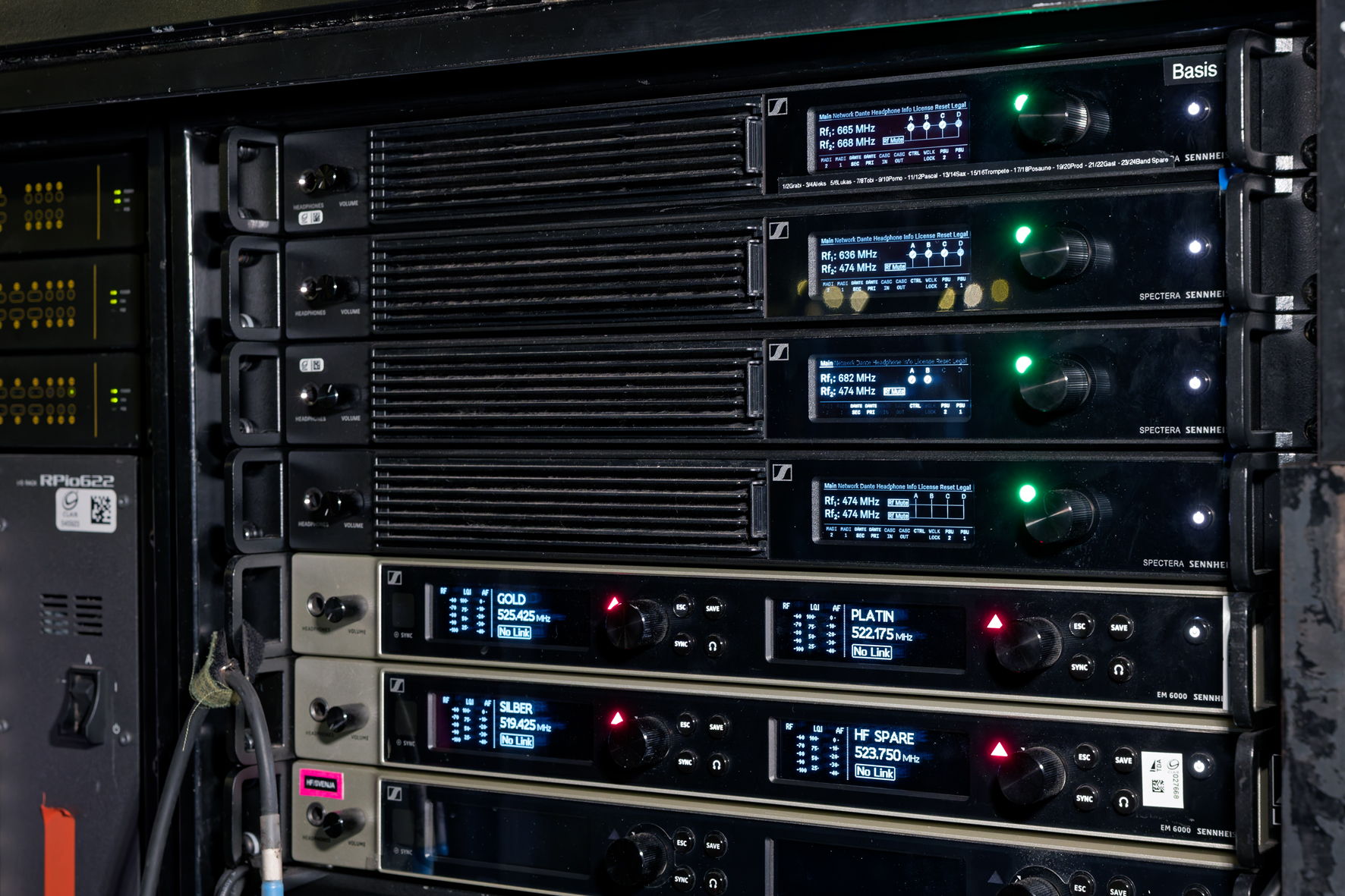
Since the crew members had a defined circle of activity during the show, two Spectera bidirectional DAD antennas were sufficient for their Base Station. Base Stations 1 and 2, on the other hand, were each connected with four DAD antennas via CAT cables of up to 100 metres to provide seamless coverage of the centre main stage, the rooftop stage, the long catwalks, and Helene Fischer’s flight paths above the audience.
Wireless expertise for Helene Fischer
RF manager Svenja Dunkel, who has been supporting Helene Fischer’s live shows for many years, ensured that the complex wireless set-up ran smoothly. “Professional wireless technology stands or falls on a trusting collaboration,” she said. “The more elaborate the show, the more crucial it is to work closely with the artist. Whether during preparation, rehearsals, or the critical moments of quick microphone and costume changes, the success of the entire production depends on seamless collaboration.
“When plans for the ‘360° Stadium Tour 2026’ became more concrete, I quickly realized that this would be an extremely complex undertaking—as is almost always the case with Helene Fischer’s tours and TV shows,” continued Dunkel. “The lighting concept had to be structured differently than for a traditional front stage, especially since Helene not only sings but also incorporates many musical, dance, and acrobatic elements into her shows. Compared to a typical rock ’n’ roll setting, there are significantly more factors to consider. I had been working on the tour since the summer of 2025. While the 360° concept was decided from the start, the exact details and their implications for frequency management and the RF set-up took shape only gradually.”
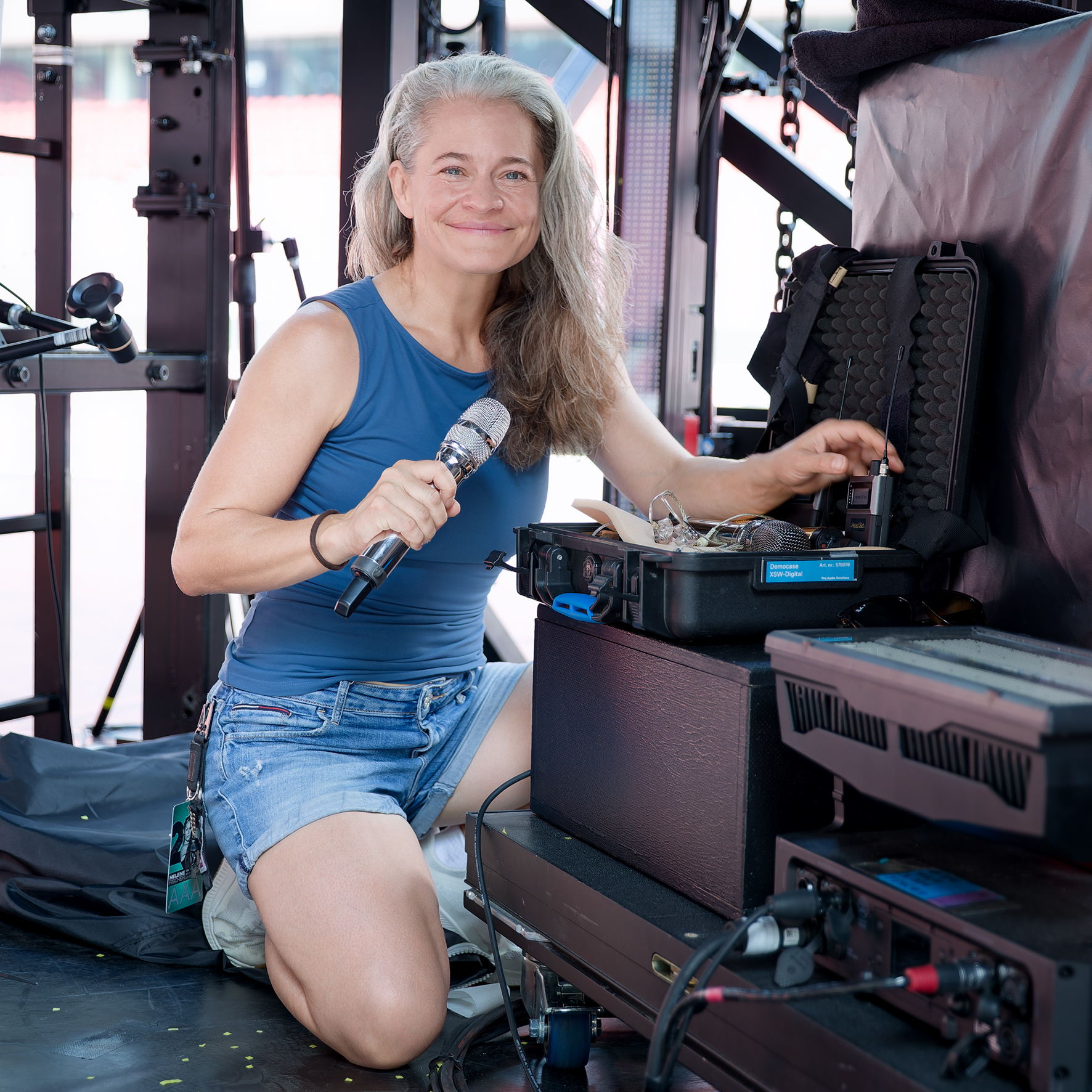
During the planning phase, Dunkel was in close contact with Sennheiser. “I felt that I would reach the limits of conventional wireless systems and wouldn’t be able to cover the stadiums in a way that met the production’s needs—at least not without any custom installations,” shared Dunkel. “The Sennheiser team provided me with fantastic support. I was pretty sure that Spectera was ideally suited to support Helene’s show in any situation and to seamlessly cover all stages, plus provide in-ear monitoring for the artist as well as the dancers, musicians, and crew members.”
Dunkel continued: “The use of any new technology—in this case, WMAS—always carries certain risks. Especially on a tour of this scale, involving a stadium, it’s essential to coordinate closely with the FOH and monitor engineers. It’s fair to say that I had to do some convincing beforehand to get the key members of the audio crew to agree to using a completely new system. To develop a perfect feel for Spectera, close dialogue with the musicians and dancers during rehearsals was particularly important to me. I also consulted continuously with Helene on critical positions and acts. They placed their trust in my expertise, knowing that the best possible decisions would be made to ensure the tour’s success.”
Dunkel’s confidence in Sennheiser’s groundbreaking WMAS technology was not misplaced: “Despite the enormous rigours of the tour, the handheld prototypes held up exceptionally well—I didn’t notice a single dropout! Also, the Spectera SKM fits very comfortably in the hand and is ideal even for smaller hands—perhaps even better than the bigger and heavier SKM 6000. I received immediate positive feedback from Helene regarding the handling of the Spectera SKM.”
The tried-and-true meets the new
Since Helene Fischer used her gold-finish Sennheiser SKM 6000 handheld during the first few songs, EM 6000 dual receivers were set up at Dunkel’s workstation, too, with one receiver being reserved for a headset and its backup, which Dunkel kept on hand as a contingency plan. “From December 2025 until shortly before the start of production rehearsals, I developed a total of five wireless concepts,” said Dunkel. “During the preparations, we initially used the tried-and-tested SKM 6000s. However, drawing on my 25 years of wireless experience, I was convinced that Spectera would be better equipped to handle the specific challenges of stadium concerts and deliver even more reliable results. During production rehearsals at the stadium, we still used the 6000 Series for Helene’s vocals and Spectera as a backup. In the final show set-up, we had Helene flying into the stadium on Spectera, which had proven more stable. When she landed on stage, we switched to the gold-finish SKM 6000 for staging purposes, which was used for the first part of the show before we switched to Spectera again.”
During production rehearsals, some time was set aside specifically to give the audio crew the opportunity to compare the sound characteristics of the 6000 Series with those of the new Spectera ecosystem. “Helene loves the sound of the SKM 6000 with the MMK 965 capsule. Naturally, the sound changes minimally when you combine the microphone with a different handheld transmitter, and existing channel settings in the consoles cannot simply be carried over one-to-one, so subtle changes in sound are inevitable,” explained Dunkel. “Our engineers worked to match old and new handheld transmitters as closely as possible at their mixing desks, and in the end, everyone—including Helene—was completely satisfied.”
IEM and mic with just one bodypack
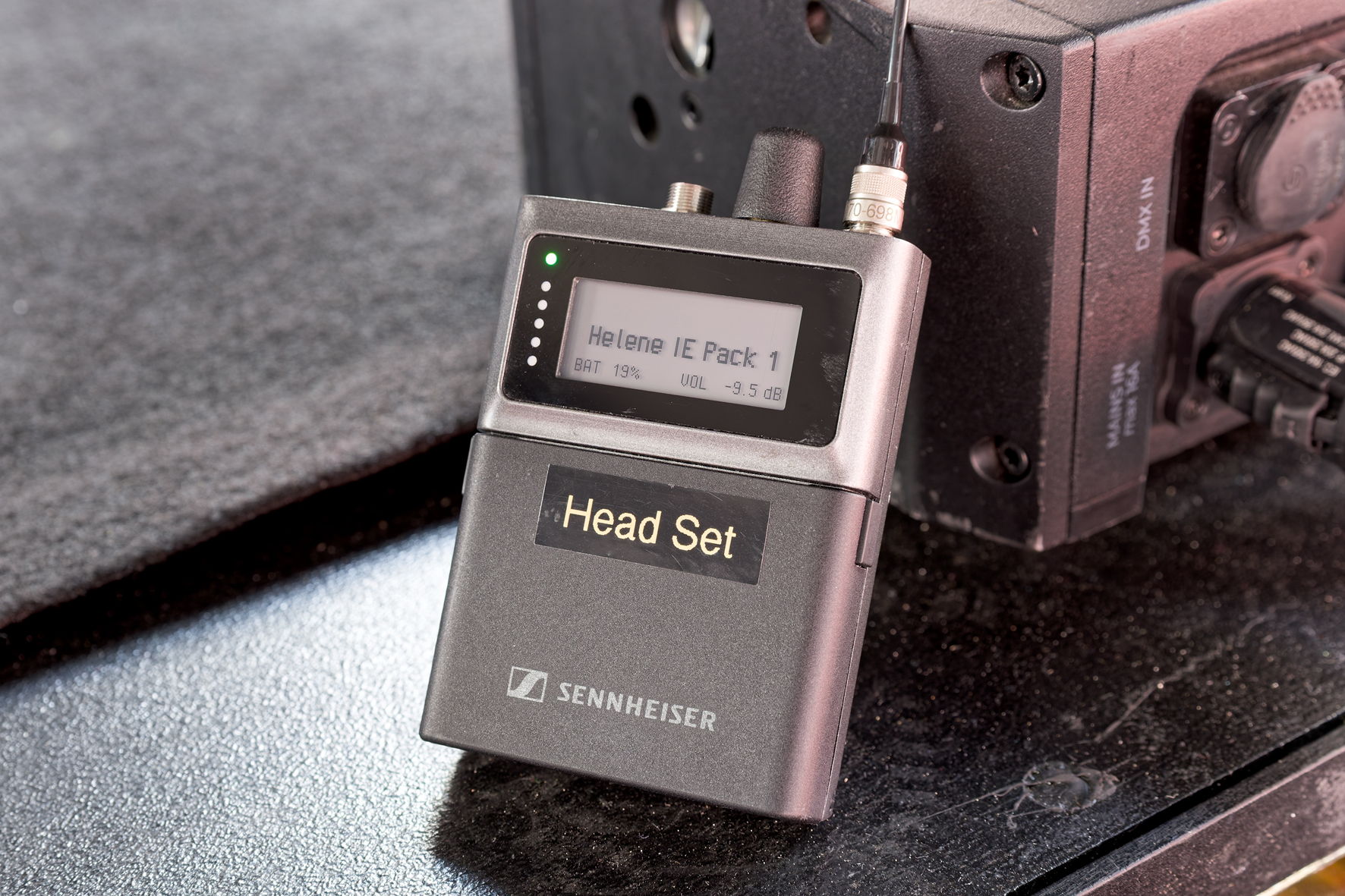
All performers and the crew were provided with in-ear signals via Spectera SEK bodypacks. For Helene Fischer, the bodypack served a dual purpose: it also transmitted the mic signals from a cardioid Headmic 4. Its capsule provides excellent feedback rejection, and Dunkel had combined it with a headband she modified herself to meet the extreme demands of the action-packed show. For the aerobatics, the headset’s position was additionally secured with tape. Dunkel aptly compared the lightning-fast process of putting on the bodypack, in-ears and headset mic under enormous time pressure to a ‘pit stop’. Four backing musicians also used the bodypacks bidirectionally with in-ears and cardioid HSP 4 headmics, which could be muted via a custom-built Command solution.
“The bidirectional functionality of the SEK bodypacks suited us very well,” commented Dunkel. “It meant Helene only had to wear a single device, and the RF coverage for the microphone was automatically guaranteed by the working IEM transmission. Nevertheless, the cabling posed a real challenge for me, as we had two SEK bodypacks in use due to the rapid costume changes, and under no circumstances were they to be mixed up. During the costume fittings, we checked where the devices could best be positioned. With a backless costume that was used for an aerobatics performance, for example, the bodypack could not be attached at hip height due to the harness. Instead, we had a pouch made that sat on Helene’s right shoulder, with the antenna pointing towards her left shoulder.” During the show, it was concealed by the artist’s loose hair.
Svenja Dunkel was supported in her demanding task by David Chasteen, Head of the RF Department at BBM | CLAIR in Berlin. The company supplied the wireless equipment for the tour, and after jointly preparing the wireless system, Chasteen joined the tour as a support RF technician.
“Helene Fischer’s tour presented a multitude of technical challenges,” said Chasteen. “The Sennheiser Spectera ecosystem is one of the aspects that personally caused me the least headache. It worked remarkably well, and thanks to the proper positioning of the DAD antennas, all relevant areas were reliably covered.”
Chasteen continued: “When you’re embarking on such a major tour with relatively new technology, you naturally worry about its reliability beforehand. But I was confident right from the start, and when I saw Spectera in action at this year’s Eurovision Song Contest in Vienna, I had no further doubts that we were in excellent hands with Sennheiser’s WMAS technology.”

A tough test: Spectera masters extreme conditions
The scale of the 360° Stadium Tour 2026 was record-breaking: 48 production lorries, 17 stage lorries and 13 night liner coaches were in use. In addition to Helene Fischer, her 21 dancers and the musicians, the crew comprised around 150 other people. The gigantic centre stage weighed 288 tonnes and towered almost 25 metres high. The LED screens had a total surface area of 780 square metres.
“Some of Helene Fischer’s XXL stadium concerts took place under extremely challenging conditions,” commented Thomas Holz. “The performers on stage, as well as the crew and everyone working behind the scenes, deserve the utmost respect for ensuring that the concerts were successfully staged despite a succession of new temperature records. The heat also placed an enormous strain on the technical equipment. The Sennheiser Spectera ecosystem, including the prototype handhelds, passed this demanding test with flying colours.”
(Ends)
Notes to Editors: The images accompanying this media release as well as additional photos can be downloaded as web resolution or high resolution files.
Helene Fischer 360 Degree Stadium Tour.docx
DOCX - 6.4 Mb
Helene Fischer 360 Degree Stadium Tour.pdf
PDF - 889 Kb

Jacqueline Gusmag
Global PR & Influencer Manager, Sennheiser electronic SE & Co. KG

