It’s full circle for Spectera at the Eurovision Song Contest 2026

Technical production by Agorà delivers a new benchmark for arena sound at the world’s biggest live music broadcast
Wedemark/Vienna, May 2026 – As the official audio supplier to the host broadcaster ORF for the Eurovision Song Contest (ESC) 2026, Sennheiser deployed its biggest Spectera set-up to date at Vienna’s Stadthalle, including manufacturing samples of the yet to be launched Spectera handheld transmitter. A total of four active Base Stations handled about 150 live streams for wireless mics, in-ear monitoring and control data in what is widely judged to have been the best live sound for the ESC ever, created by technical production company Agorà. Sennheiser’s technical application engineering (TAE) team, headed by Jonas Næsby and Volker Schmitt, were on site to provide support with the wideband system and the new workflows it permits.
ORF had turned the Vienna Stadthalle, and in fact the whole city, into a truly spectacular venue for the ESC and its huge fan community. The excitement in the area was tangible, as it was with the technical suppliers. As Volker Schmitt noted, “The anticipation was constantly rising, especially as the 70th Eurovision Song Contest promised to be one of the most technically ambitious productions. In addition to the live television magic and creativity the ESC radiates, its scale and complexity have always been an invitation to the industry to bring – and often unveil –their latest and greatest technology. That does not just refer to us bringing Spectera to Vienna, but also to video, lighting, the laser crew, you name it.”
Valerio Motta, ESC project lead at Agorà, said: “Eurovision is a fast-paced, dynamic, and highly demanding production. Everything feels calm as long as everything works, and having Sennheiser involved in such a delicate project made the entire audio team feel supported and confident. We all knew that even if any issues had come up, which they didn’t, the manufacturer’s support would have been there to help resolve them in the best possible way.”
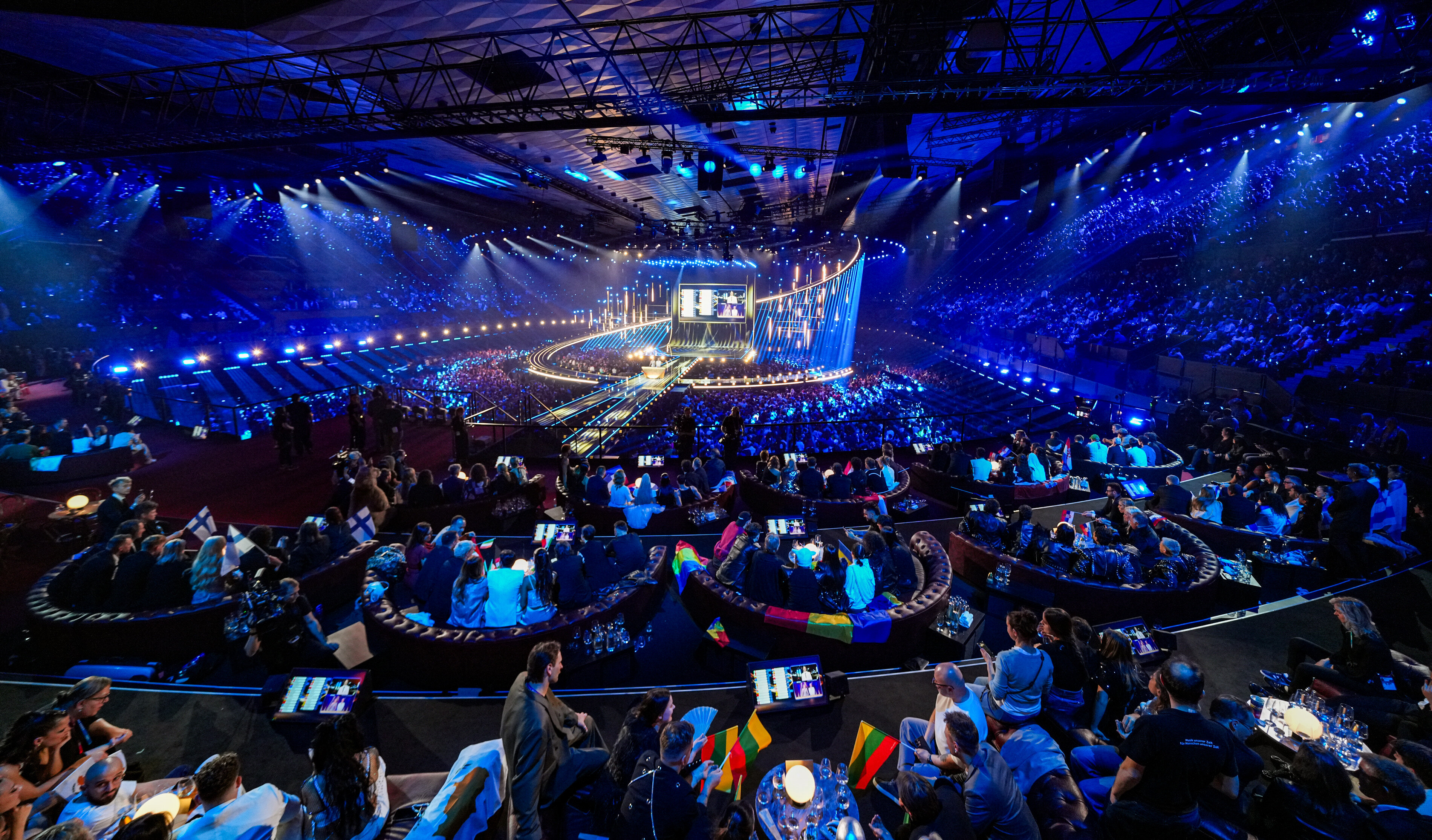
“I believe there was a unique combination of factors that contributed to the result: excellent sound coming from the PA system, great signal flow management, and outstanding audio quality in the artists’ ears,” continued Motta. “Not receiving a single complaint from any artist is a strong validation of the listening experience they had throughout the event. Using Spectera during such a demanding production environment and integrating it into a workflow of this scale was interesting not only from a technical perspective but also in terms of operational flexibility and signal management. In a production where reliability and speed are essential, having tools that simplify complexity can make a real difference.”
%20of%20Agor%C3%A0%20-%20Photo%20credit%20ORF.jpg)
In the Sound Room
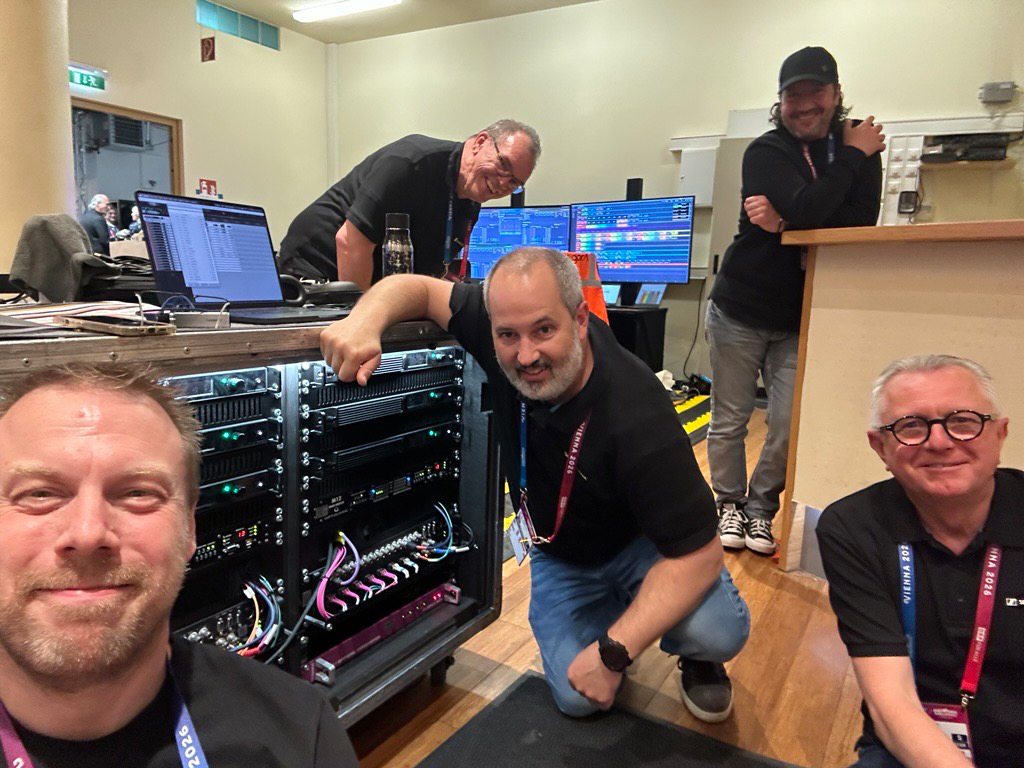
Behind the scenes, technical crews, artists, and broadcasters had been working tirelessly for weeks to fine-tune every detail of the spectacular shows. The Stadthalle’s sound room, led by Head of Sound Gerhard Jansa, handled mic audio, IEM audio, artist audio preparation, and audio distribution to the OB vans. Failsafe operation was key for the entire event; for example, the sound room accommodated two independent mixing desks with an operator each.
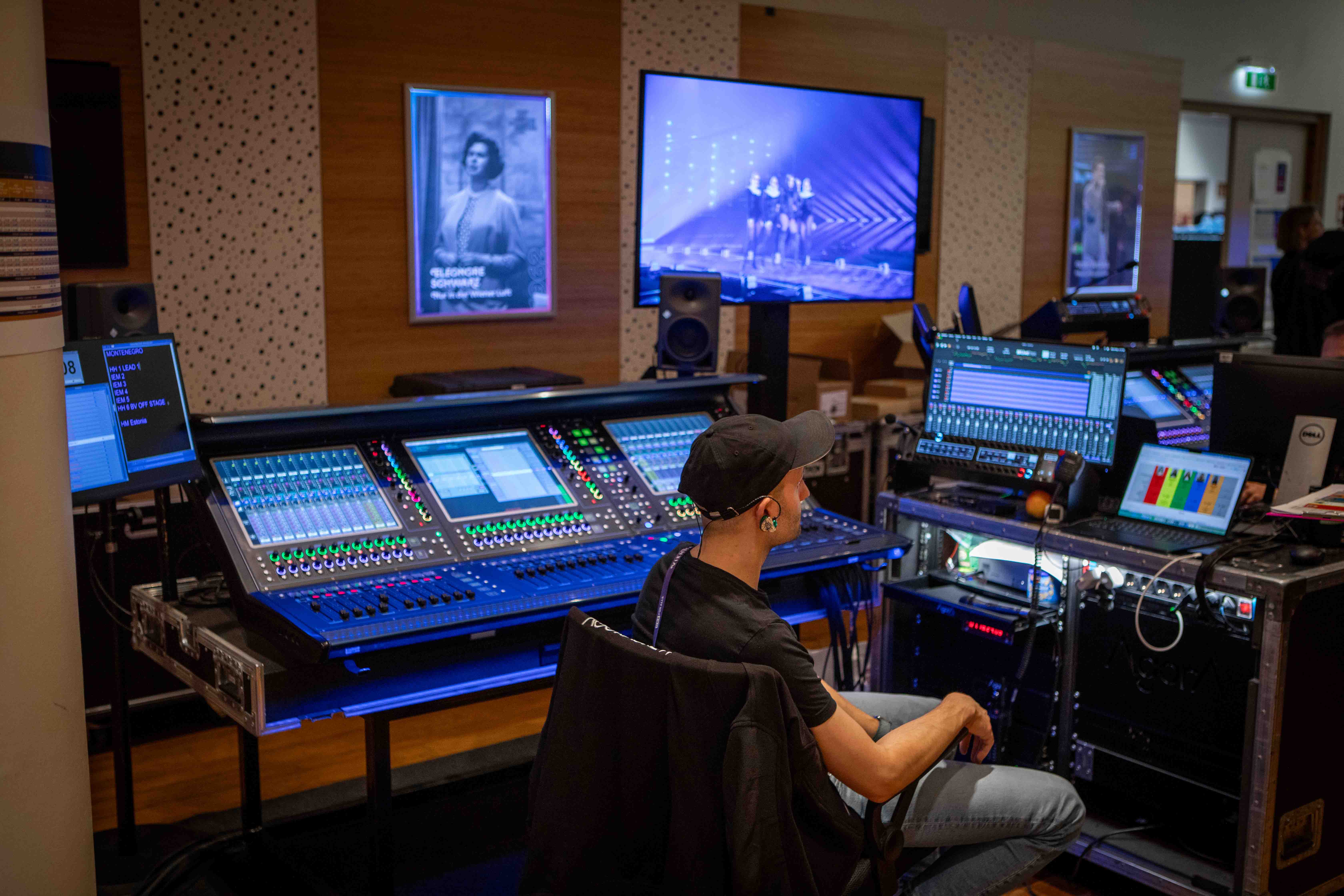
The same idea of failsafe reliability was behind the six Spectera Base Stations that were used – while four were active for audio and control data, working on one RF channel each, another one was exclusively dedicated to scanning the spectrum 24/7, but could also run as a spare as it was already linked with all antennas. A sixth Base Station was a true spare unit.
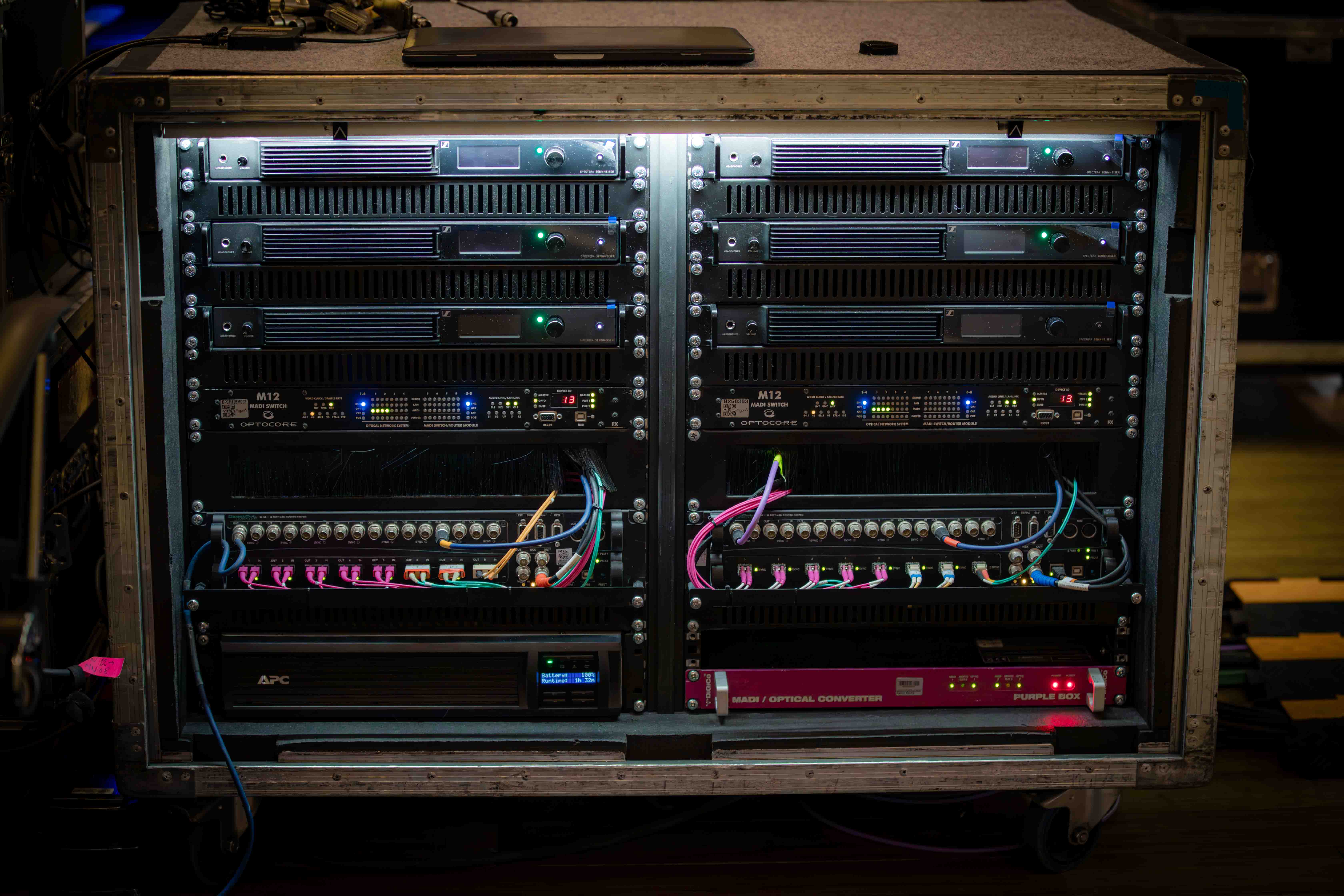
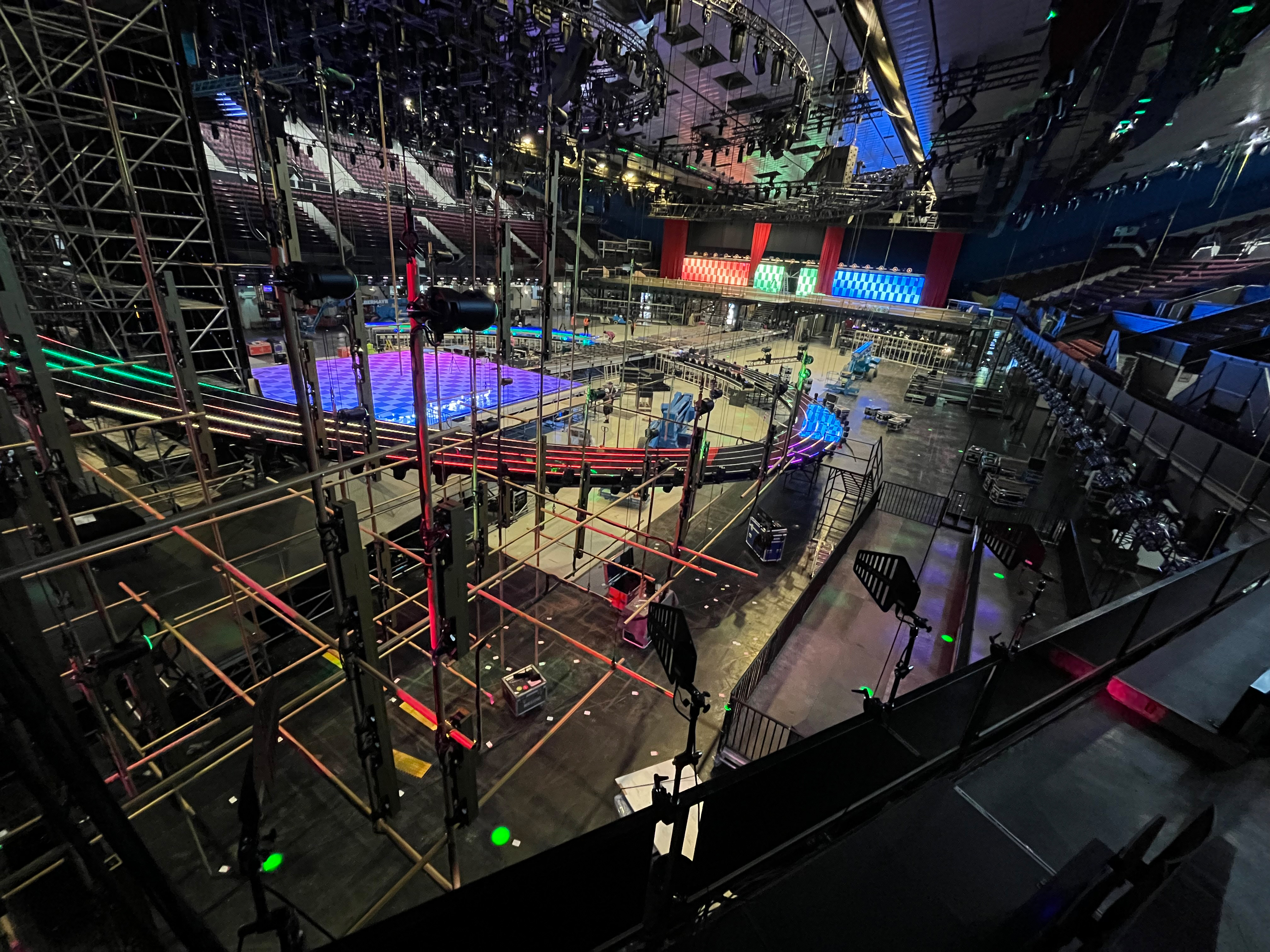
“The requirement of ORF was nicely simple and short: ‘We need coverage in the entire venue.’,” recalled Schmitt. “We started out with two Spectera DAD antennas at stage right and green room left for each Base Station, and that gave us full transmit and receive power for the hall. For extra reliability, we then added another two antennas per Base Station. Also, a firmware variant especially for the event had given us a preview of upcoming functionalities that were needed on site, such as a level recorder.” An RF control center in the sound room continuously provided a full overview of the current status of the Spectera wireless microphones and in-ears using Spectera WebUI and the Sonoros app.
%20and%20Sonoros%20app%20(right-hand%20screen).jpg)
Jonas Næsby pointed out the simplicity that Spectera provided for cabling the arena: “We used a fibre run from the sound room to FOH, converting back to copper using standard IT media converters. This meant that we got the full performance of the remote antennas, and not the usual compromise presented by RF-over-fibre systems used with conventional wireless.”
Spectera DAD antennas were also mounted behind the stage to ensure perfect coverage when the artists would enter the stage from behind the video wall.
Rotation makes the wireless world go round
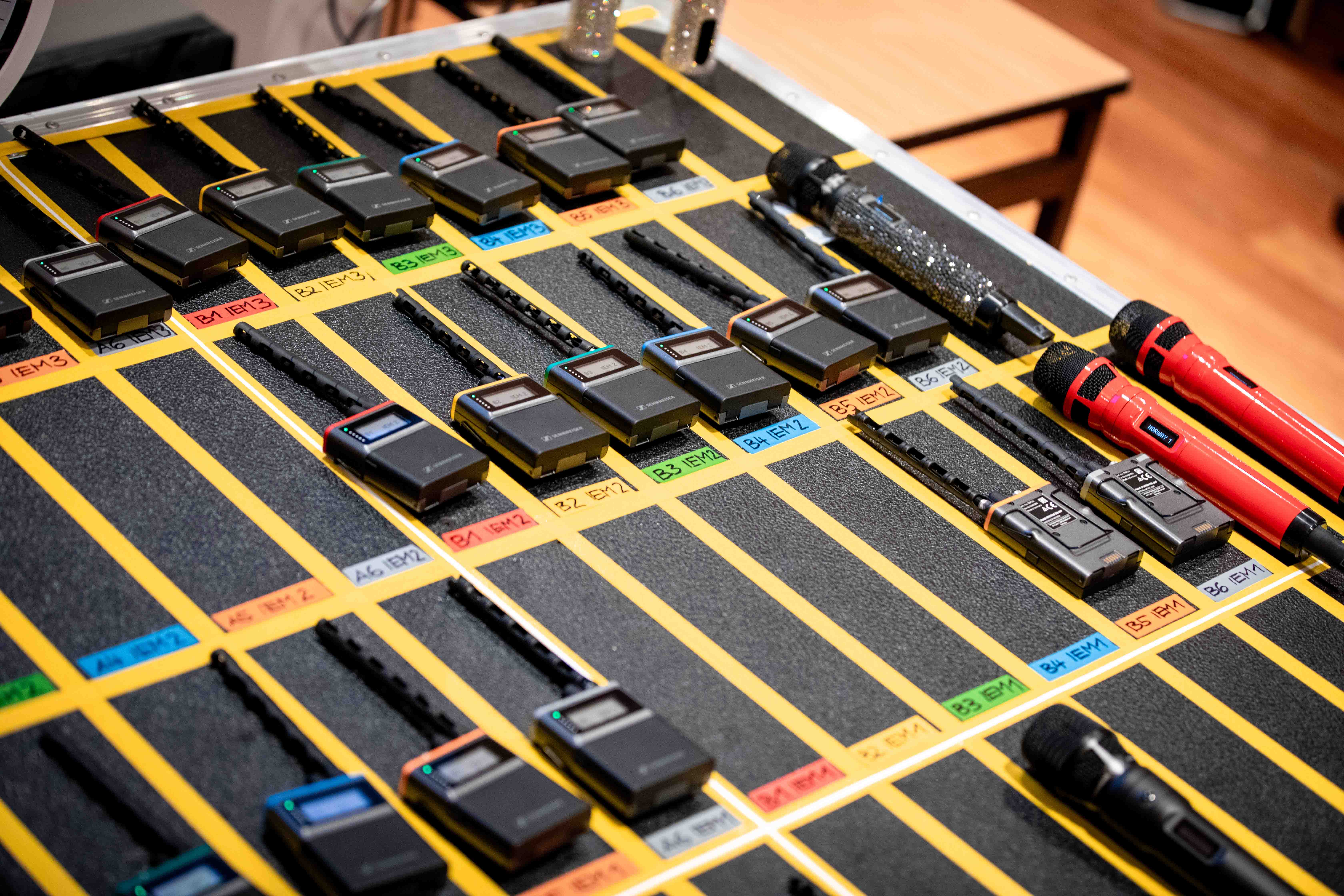
The songs presented at ESC are three minutes long, and just as the many stagehands who were working so swiftly outside the camera angles, the audio team only had 42 seconds to change over to the next act. With six people maximum on stage per act, the team provided a mic rotation of six Spectera handhelds, an in-ear rotation of six Spectera SEK bodypacks working as in-ears only, and an ‘all-in’ rotation of six Spectera bodypacks with headsets mics and in-ear monitors.
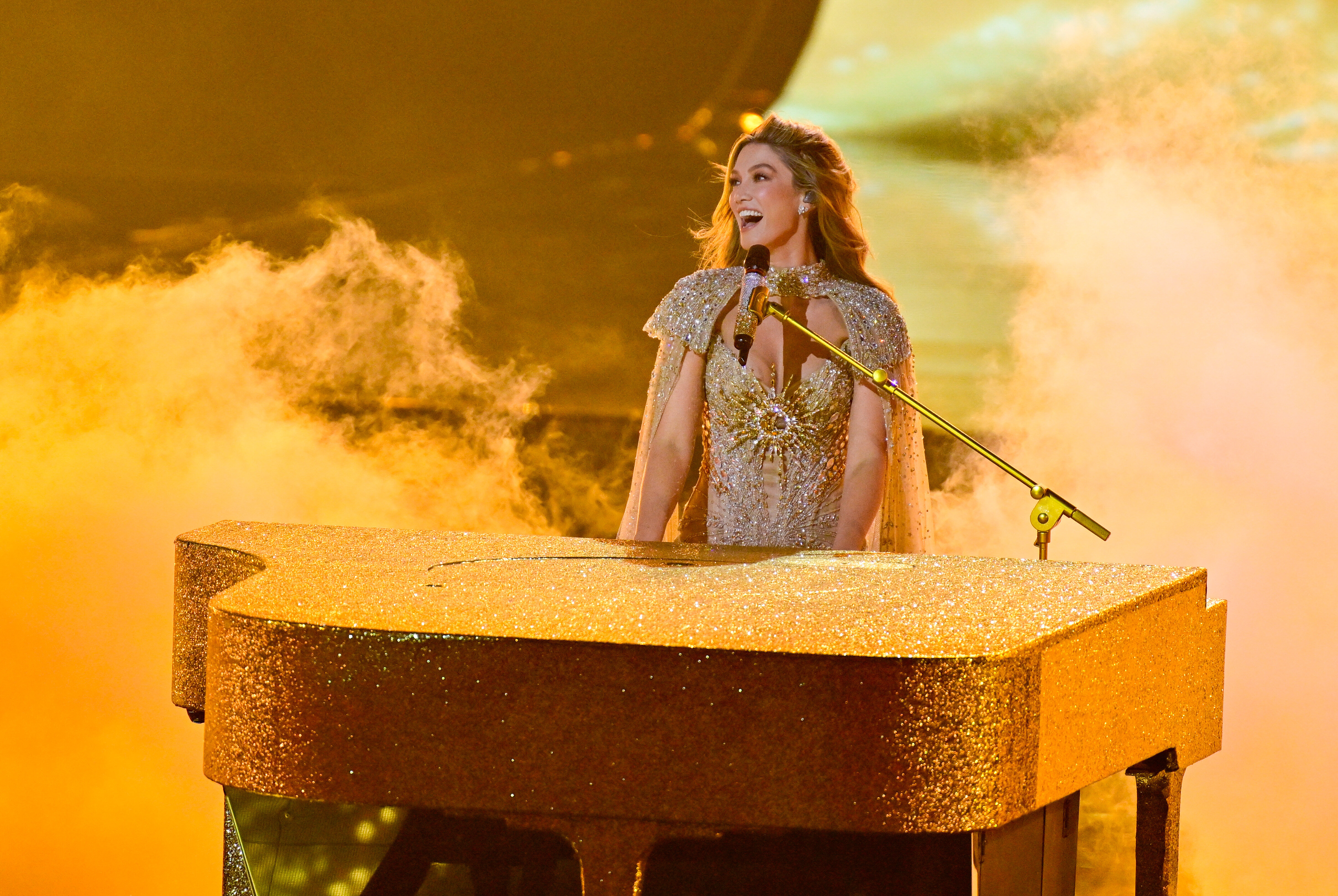
Naesby noted, “For the artists who opted for a hands-free solution, we used the bidirectional Spectera bodypack with a cardioid Headmic 4. This mic contributed prominently to the overall sound quality, performing extremely well in front of the PA and wind machines. For those who preferred a Spectera handheld mic, we had brought the soon to be released Neumann KK 105 A capsules. This is a super-cardioid model to get less pick-up from adjacent sound sources and the room.”
Highlighting the dimensions of the show, Næsby pointed out that “No other TV production builds in more redundancy than the Eurovision Song Contest. Almost the entire set-up has a full backup system ready to take over. Really, the only two things, where a dual set-up doesn’t work, are the artist, and the microphone in their hand, making it the single most important piece of equipment in the signal chain. The Spectera handheld SKM quickly proved to be the perfect solution. The unmatched RF stability of wideband transmission, combined with multi-antenna capabilities instantly provided confidence to the production that ORF had made the right choice of bringing these pre-production samples to a show of this calibre.”
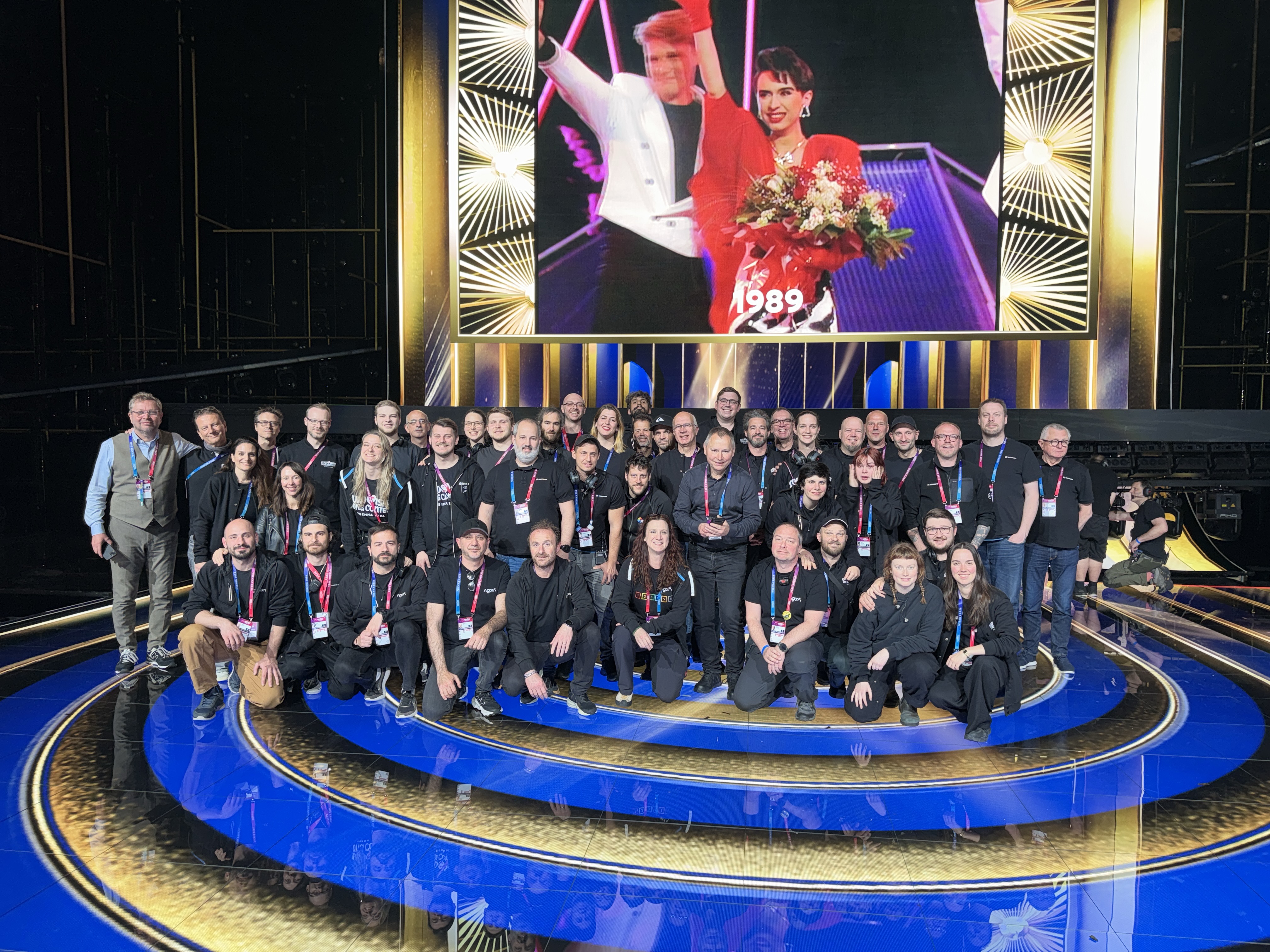
Amidst their work at the Stadthalle, the crews in the sound room still found the time to give something back: From load-in to the grand finale, donations were collected for St. Anna Children’s Hospital in Vienna, with Sennheiser matching the contributions. ORF and the EBU also invited 16 young patients and their parents to a special backstage visit with tour guide Victoria, where they met Austrian performer Cosmo and Cyprus entrant Antigoni, while collecting autographs and selfies from other artists along the way.
Wideband advantages
“Spectera made life easier for everybody,” continued Schmitt. “For the talent, who were impressed by its fantastically clear, spatial in-ear sound and who had just one bodypack to hide in their costumes when using a headset mic. For the dressing/undressing team, who were happy that there was just one bodypack to fit into the costume, and last but not least for us, as Spectera is providing us with essential health data.”
“During rehearsals, we had a small incident where the talent on stage said ‘I can’t hear myself.’,” explained Schmitt. “In the past, that would have meant that we had to dash out of the sound room and up onto the stage to check what was wrong with the device. Now, we could see the issue in the Spectera software, connect with the liaison manager, ask her to plug in the earphones of the talent, and all was set. Nobody was in panic mode, everything was calm, which gave us a very, very good feeling for this production.”
Schmitt goes on to cite a more complex example with an act that changed the stage costume three times – in an environment where inconsistency can introduce errors. “In the past, we didn’t have any feedback from the device about how it fared with the newly chosen costume, which in this case was studded with metal elements, making us wireless experts extra nervous. With Spectera, we could immediately see when RF health deteriorated and take counter-action, before the artists even noticed that something was not OK.
“Overall, Spectera earned praise from engineers, production teams and delegations alike for its crystal-clear audio, flawless wireless performance and exceptional RF stability in what is one of the most demanding and most celebrated live music broadcasts in the world,” Schmitt concluded.
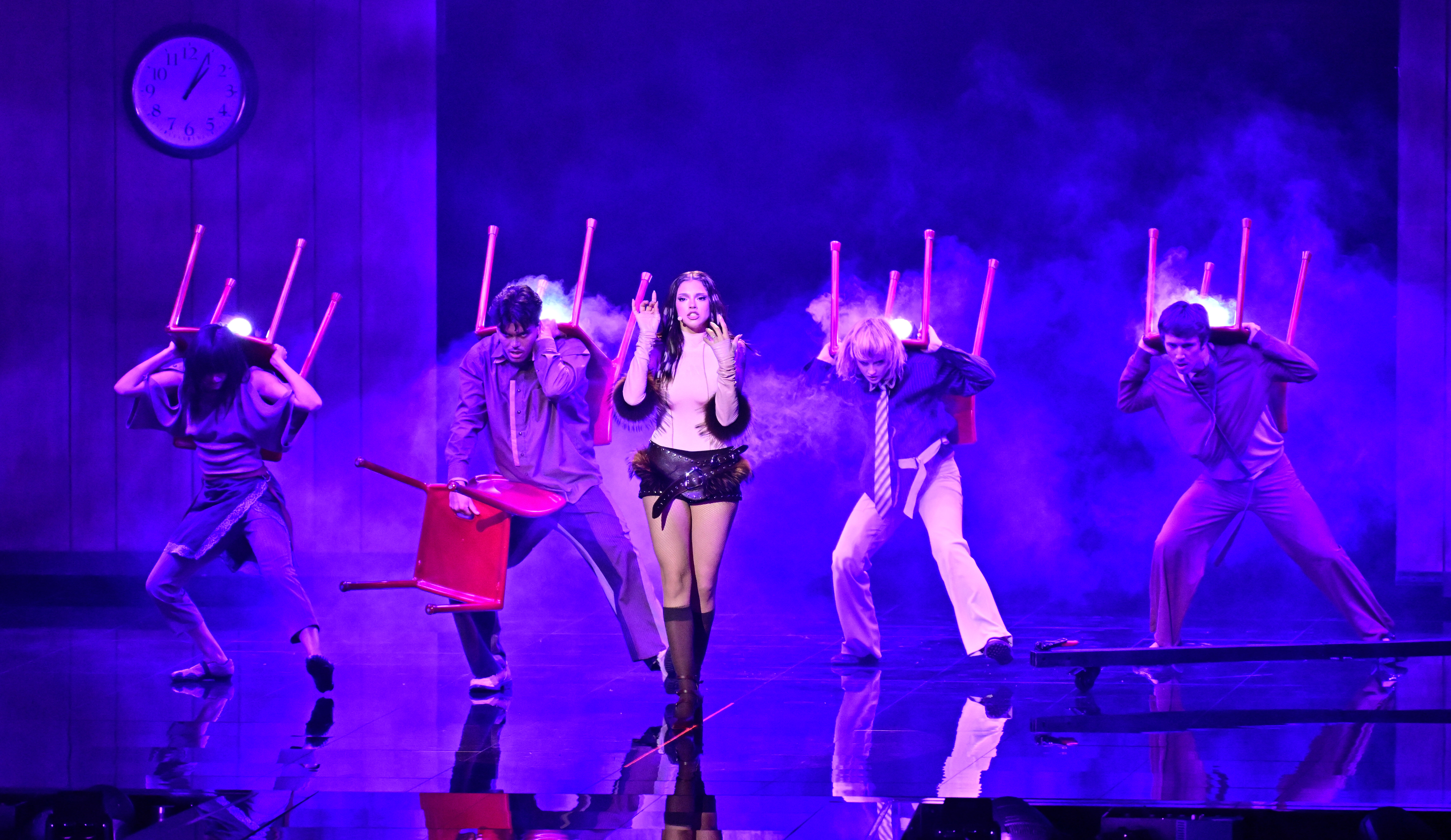
Spectera goes full circle
Sennheiser WMAS developers Jan Watermann and Sebastian Georgi were excited to see Spectera come to the ESC. “A truly unique event, and we were so pleased to see the system being employed on it for the first time,” said Georgi.
“It was actually at the ESC in Copenhagen in 2014 when fading problems required me to develop some software fixes for Digital 9000,” recalled Watermann. “A former shipyard had been chosen as the ESC venue, measuring 160 metres by 160 metres, everything made of metal. No RF would work in that environment. No comms radio, no police radio, no radio networks of any public authorities. We got Digital 9000 to work by employing special filters and optimising antenna positions.
“You can actually say that the ESC was the birth of Spectera, because it was there and then that we decided to address the fading issues from a totally new angle. With standard wireless, you can set up more antennas, but that does not solve the underlying problem: the fading notches and cancellations. We wanted to eliminate those at the root.”
Georgi added: “And so we started out with the development of wideband technology for professional audio. Working with a broadband channel of 8 MHz, which is not prone to those fading notches, was the beginning. As bandwidth must not be wasted, this required multiplexing microphones differently, which again led us to the idea of time slots, and so the ball got rolling.“
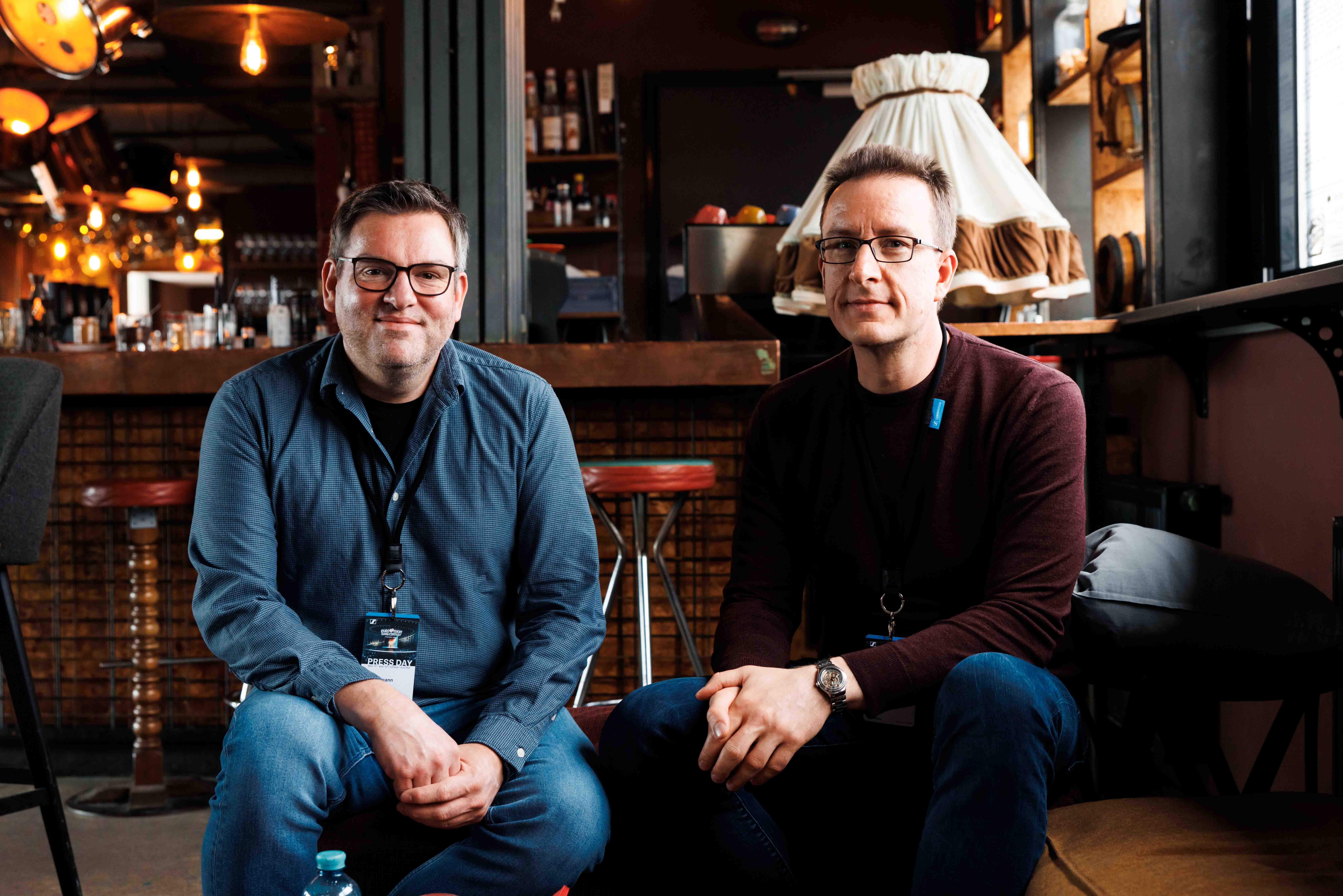
Watermann and Georgi actually returned to that same Copenhagen venue with their WMAS demonstrator in January 2016. “We set up a single antenna, and had coverage within the entire hall! That was the first time I saw Jonas Næsby on the verge of tears,” smiles Georgi. “This shipyard is like a Faraday cage, and we had perfect coverage just like that.”
Spectera puts an end to fading – and phasing
Watermann pointed out another important aspect that often gets overlooked: “The second issue we resolved are the phase issues and clock synchronisation of digital systems, the fact that phases can cancel each other out when multiple signals converge,” said Watermann. “Standard digital microphones have an internal clock, which simply starts transmitting. Even though the sample rate of the mics is the same, they aren’t perfectly in sync. To be able to output them together, I would have to convert them all individually, because I can’t tell the microphone to go slightly faster or a little bit slower; it just transmits, and you have to process the signals as they arrive.
“A classic example of phasing issues is a broadcast host who uses a headset microphone and at the same time a handheld mic for interviewing a guest. During the interview, the host tends to forget that he or she is miked up already, and speaks into the handheld, too. The sound engineer gets the host audio over the headset mic and the handheld, so two signals, and on the mixing desk this results in cancellations within the frequency curve. The audio suddenly sounds weirdly phase-shifted, out of tune, if you will. Then the audio engineer usually reacts very quickly and pulls the fader down on one of the mics, but for a few seconds, you can hear this phasing effect.”
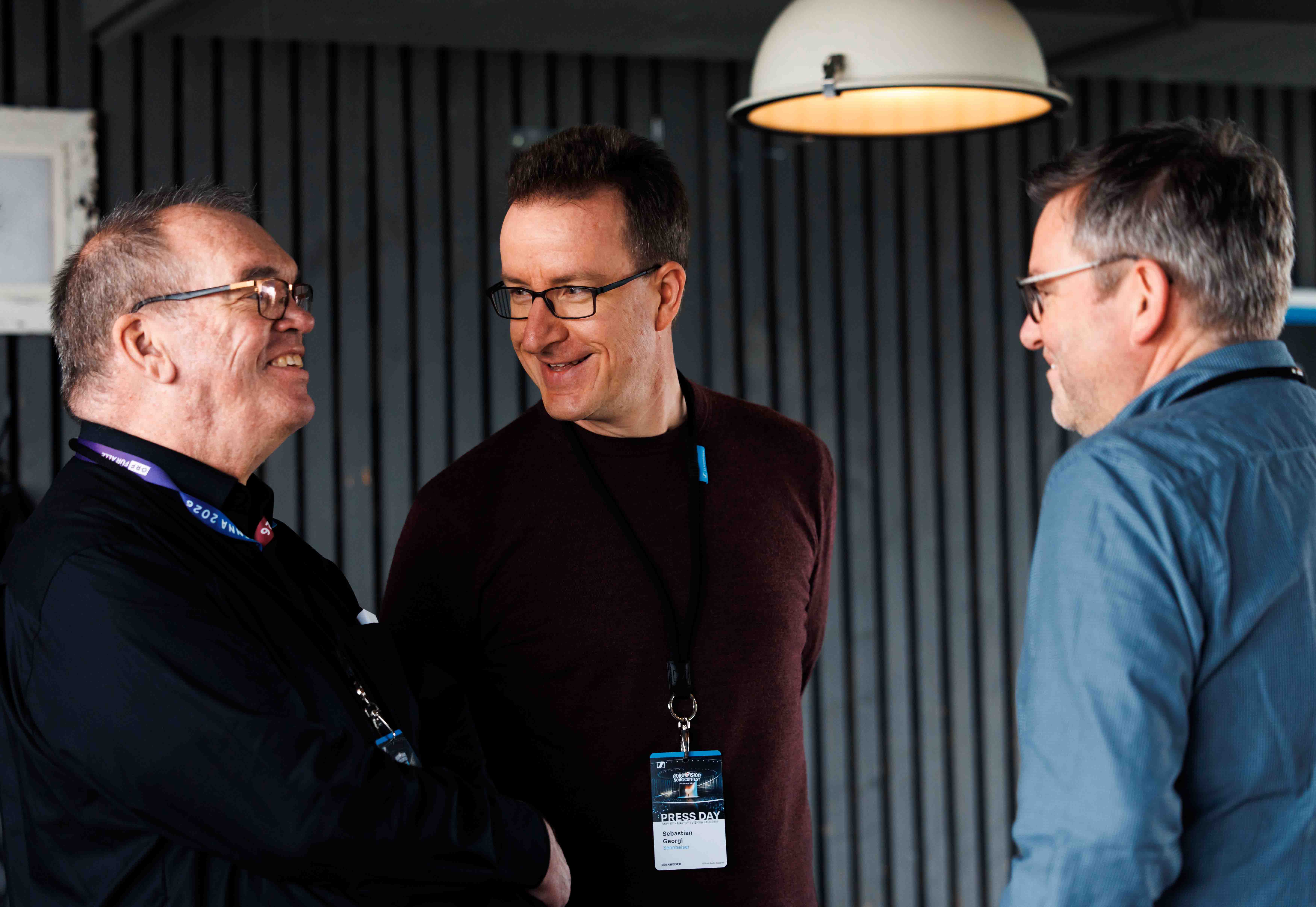
Georgi added: “For Spectera, we needed to be synchronised anyway for the TDMA technique we’re using, so we can now sync the internal clock of the mics, too. Now the sound engineer no longer has any issues with phasing and can simply mix all mics. This isn’t just theory; we built the demonstrator and actually had five open microphones, and several people listened in and noticed, ‘Wow, there’s no more phasing here.’”
“This is where Spectera comes full circle,” the developers concluded. “Development started as a solution to the fading challenges that the ESC posed, and in its 2026 edition Spectera has arrived at the ESC, solving these issues, streamlining workflows and delivering exceptional audio for artists and audiences alike.”
Næsby also was proud to once again have new Sennheiser technology on Eurovision: “Sennheiser made this show wireless back in the 80’s, digitised it in 2013 with the introduction of Digital 9000 and now uses the cutting-edge Sennheiser WMAS with Spectera.”
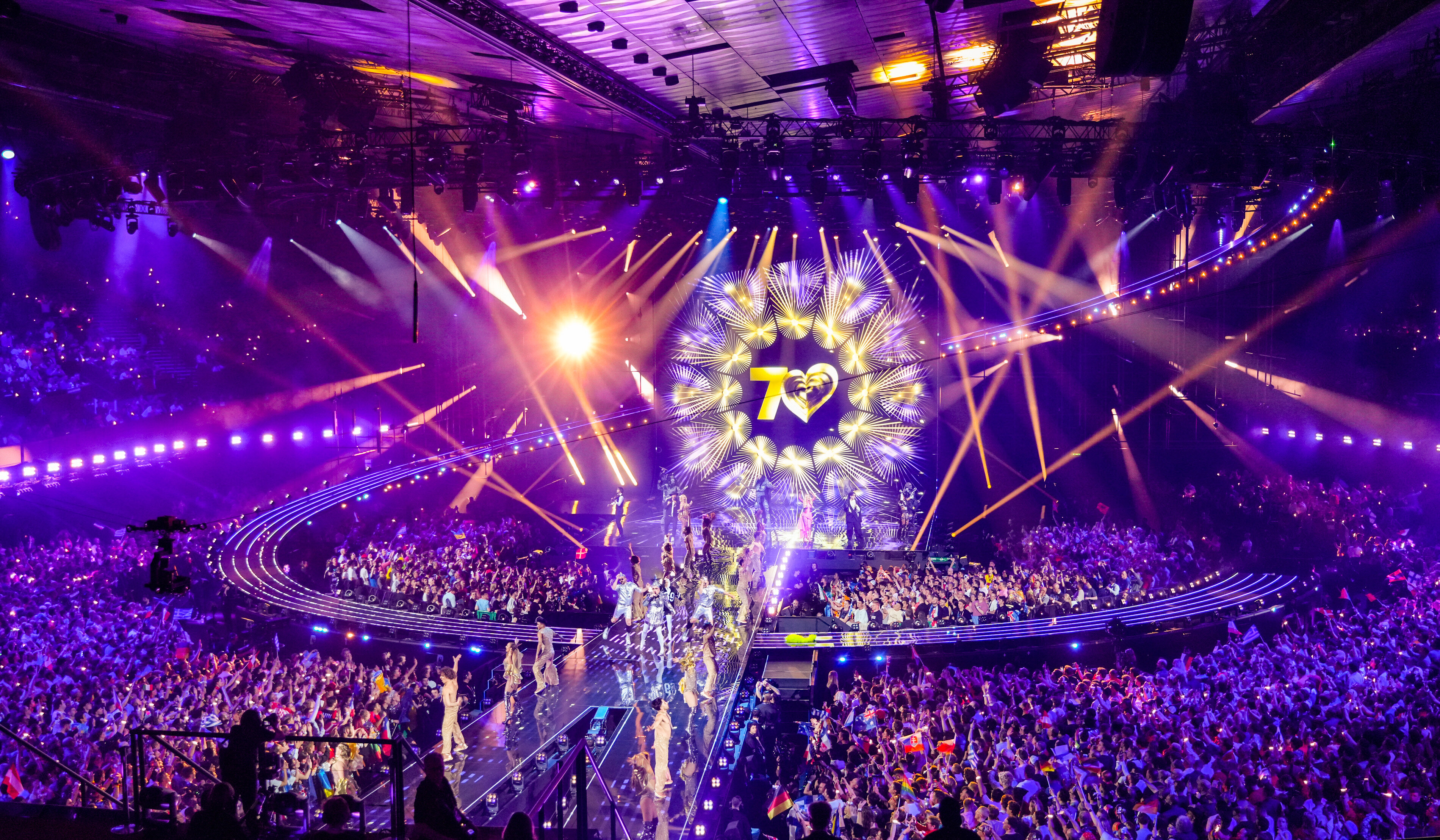
Sennheiser equipment in use during ESC 2026
4 x active Spectera Base Stations, using one RF channel each
1 x Spectera Base Station for scanning
46 x Spectera SKM handheld microphones with Neumann KK 105 A super-cardioid capsules
101 x Spectera SEK bidirectional bodypacks
Headmics 4 (cardioid)
IE 100 PRO in-ears and EK 2000 IEM bodypacks for the orchestra and dancers (openings and intervals)
(Ends)
The high-resolution images accompanying this media release and additional photos can be downloaded here. Please make sure to include the photo credit where given.
Additional show images are available via the ORF, please register at https://presse.orf.at/ and create an account.
About Agorà
Rome-based Agorà is a leading production company for the rental, supply and installation of lighting, audio, video graphics, rigging and structures for every kind of music, corporate, sport and mass event. Founded in 1990 by brothers Wolfango and Vittorio De Amicis, the company’s customer focus, high degree of customization and excellent quality of work have made it grow rapidly to one of today’s leading production companies in Italy and one of the largest in Europe.
ESC 2026 - Sennheiser and Agorà.docx
DOCX - 12 Mb
ESC 2026 - Sennheiser and Agorà.pdf
PDF - 2.2 Mb

Stephanie Schmidt
Regional PR & Influencer Manager DACH/UK/Nordics, Sennheiser electronic SE & Co. KG


