Theater in der Josefstadt: into a new audio era with Sennheiser Spectera

Wedemark, June 2026 – With audience numbers in excess of 200,000 and around 550 shows each season, the Theater in der Josefstadt in Vienna is one of the most successful theatres in the entire German-speaking world. The historic playhouse located in Vienna’s 8th district is renowned for the outstanding quality of its theatrical performances. It also meets the highest standards when it comes to its audio equipment: since 2025, Sennheiser Spectera wideband wireless systems have been a key component of the theatre’s completely digital audio workflow.
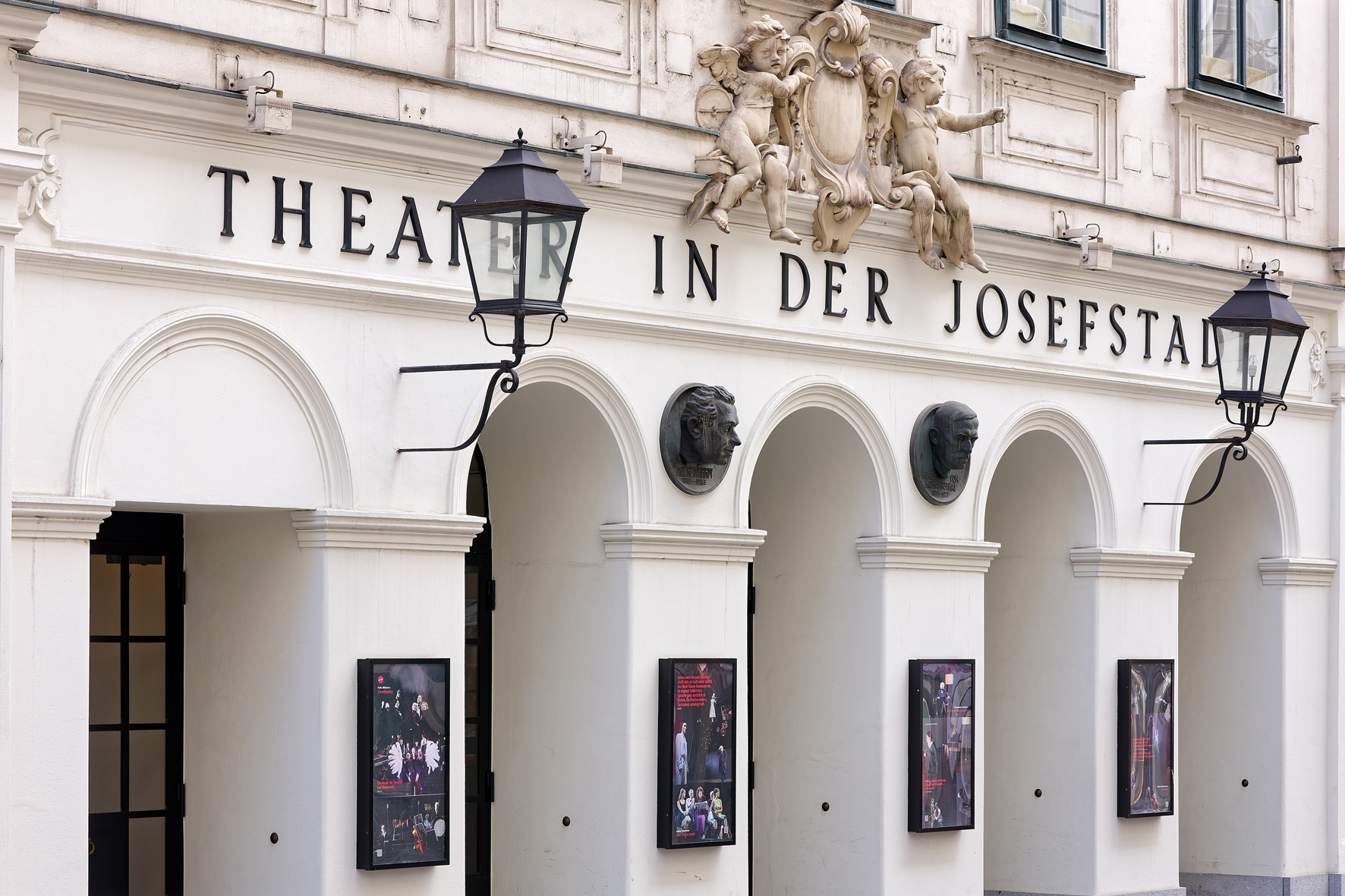
Digital wireless avant-garde
“We are the first theatre in Austria to be equipped with permanently installed Sennheiser Spectera systems,” says Raimund Hornich, head of the Sound Department/Multimedia. He has been employed at the Theater in der Josefstadt since September 2023, after previously working for 14 years as chief sound engineer at the world-famous Burgtheater in Vienna. Together with his deputy, Thomas Haas, who has been with the Theater in der Josefstadt for 16 years, he was responsible for carrying out a comprehensive revitalisation of the venue’s audio equipment. This was completed over a six-week period in 2025 during the theatre’s summer break.
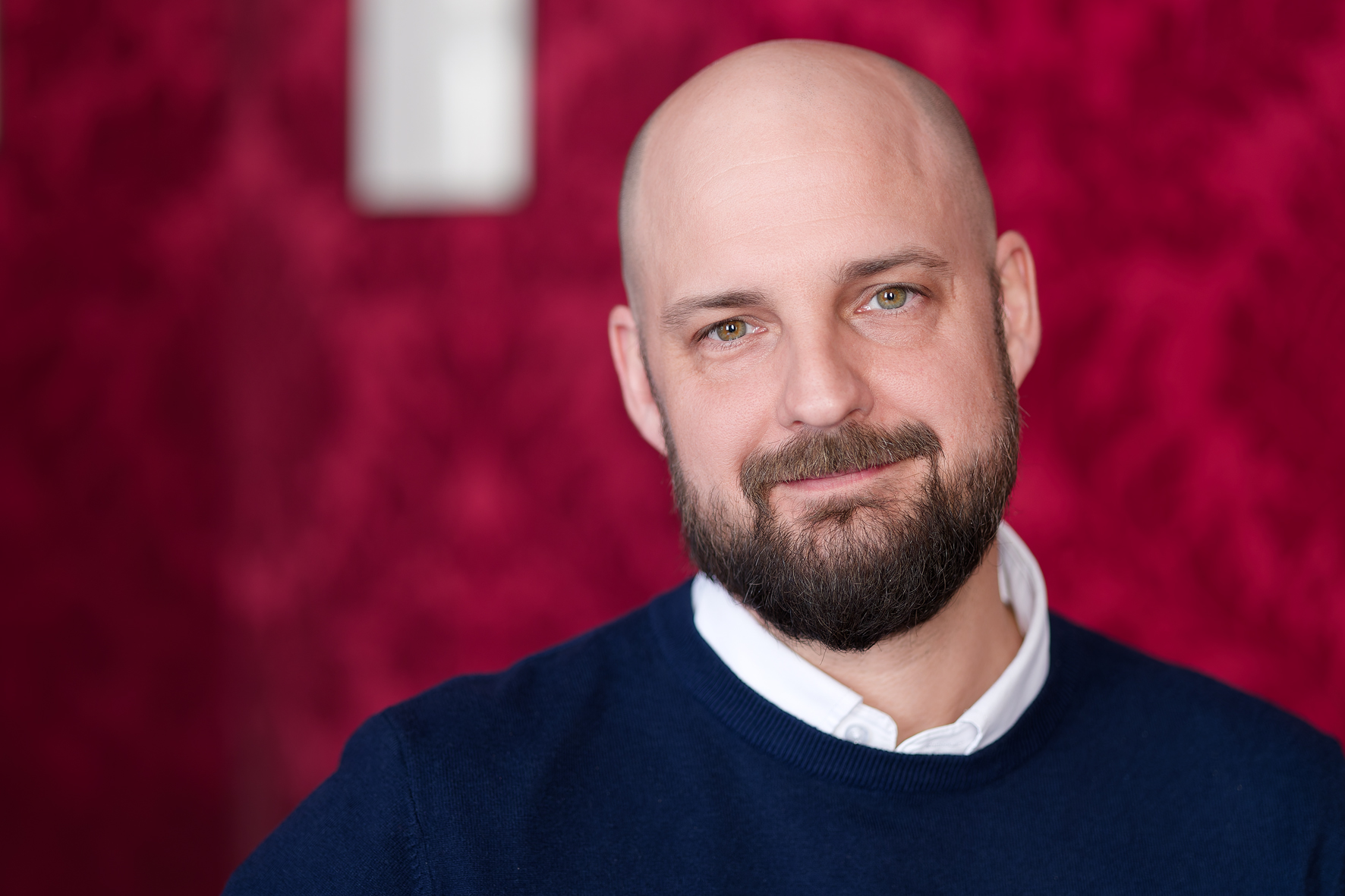
Raimund Hornich, tonmeister and head of the Sound Department/Multimedia
The main components of the new audio system include a state-of-the-art digital console, high-performance speakers, including a newly added centre cluster, and the innovative Sennheiser Spectera ecosystem. The system uses two Spectera Base Stations, 26 bidirectional SEK bodypacks and eight DAD antennas. Sennheiser’s groundbreaking WMAS technology is used in the theatre’s main auditorium, which has three balconies and provides space for almost 580 people.
“The existing sound equipment was really starting to show its age and was in need of urgent replacement,” says Hornich, explaining the motivation behind the call for tenders that had been issued internationally.
A two-way revolution: bidirectional bodypacks
“The Theater in der Josefstadt already had the benefit of Sennheiser wireless technology,” Hornich reports. “It was used, and is still being used, with great success – even the receiver modules of a fairly ancient EM 1046 mainframe are still doing a reliable job for us in some special applications. Nevertheless, before deciding on a brand-new wireless solution, it was only right that we looked around and evaluated products from other suppliers as well. However, when it came to the range of features available and real value for money, the competitors weren’t able to match what Sennheiser could offer us.”
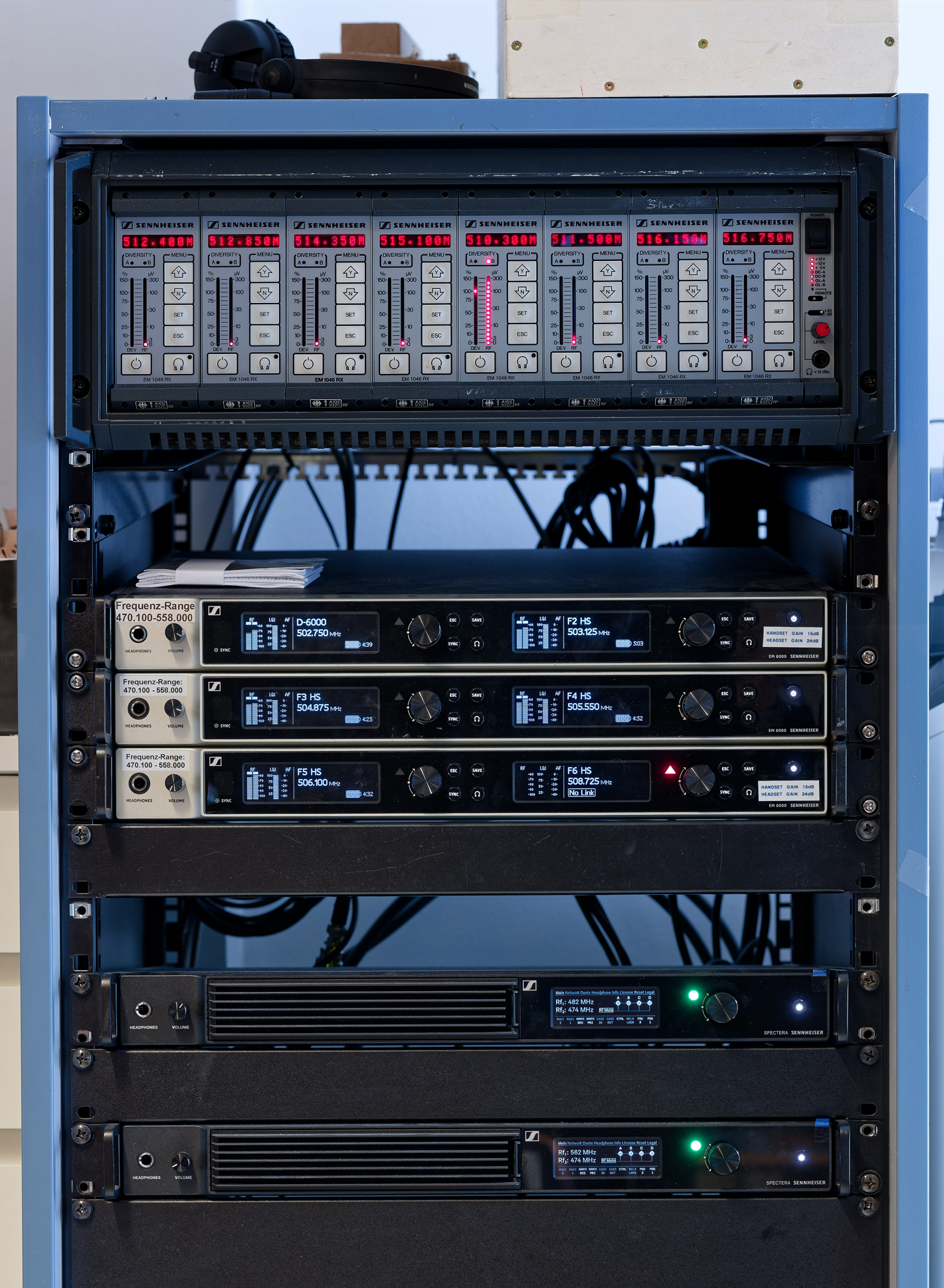
According to Hornich, the fact that Spectera wideband wireless systems are being used at the theatre today is also the result of favourable timing: “We had originally intended to further expand our existing Sennheiser Digital 6000 systems, which are also in use at the Kammerspiele, a venue affiliated with our theatre,” he explains. “But then Spectera came along – at exactly the right moment for us.”
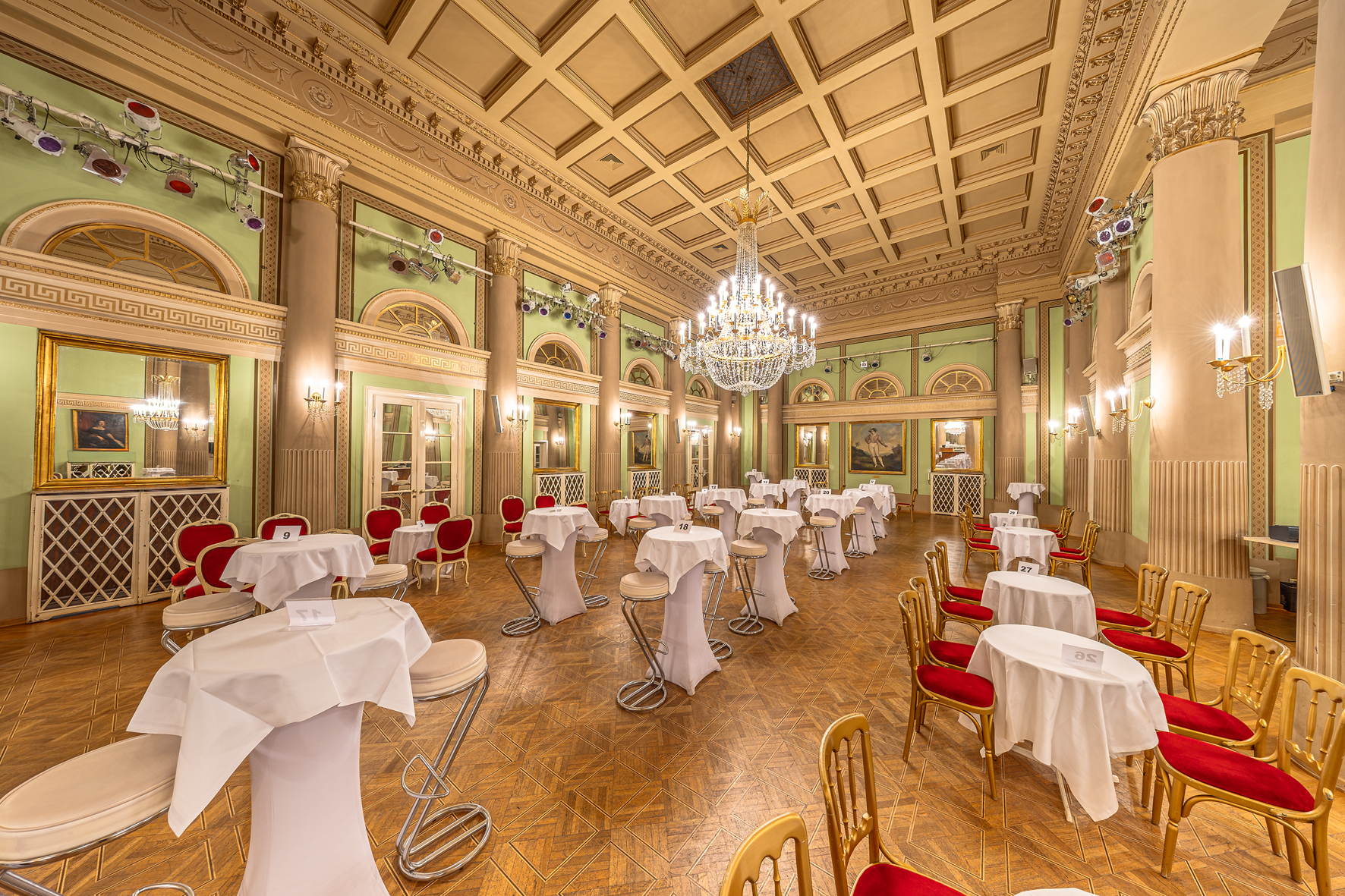
Hornich adds: ”It’s fantastic that the SEK bodypacks can be used simultaneously as a transmitter and a receiver. We don’t always need this dual functionality, but it’s a real advantage to have this possibility available when we do. The first production of the upcoming season, under our new artistic director, will be performed throughout the entire venue, including the adjacent Sträußelsäle ballrooms, which means that the action is not confined to the stage. “So in this context, the combination of a transmitter and a receiver in a single unit can really show its full potential.”
Seamless freedom, maximum flexibility
A total of eight Spectera DAD antennas, powered via PoE through CAT cables, are installed in various positions in the theatre to provide maximum flexibility: “It really doesn’t matter where the performance is taking place – there are no dropouts, not even in the dressing rooms,” Hornich is pleased to say. “If we briefly lose the connection because the performers want to enjoy the good weather before the show and spend some time outside on nearby Jodok-Fink-Platz in front of the magnificent Piarist Church, the signal reconnects immediately when they re-enter the performance area. According to reports, an update will ensure that logging the SEK bodypacks into the system will take even less time in the future.”
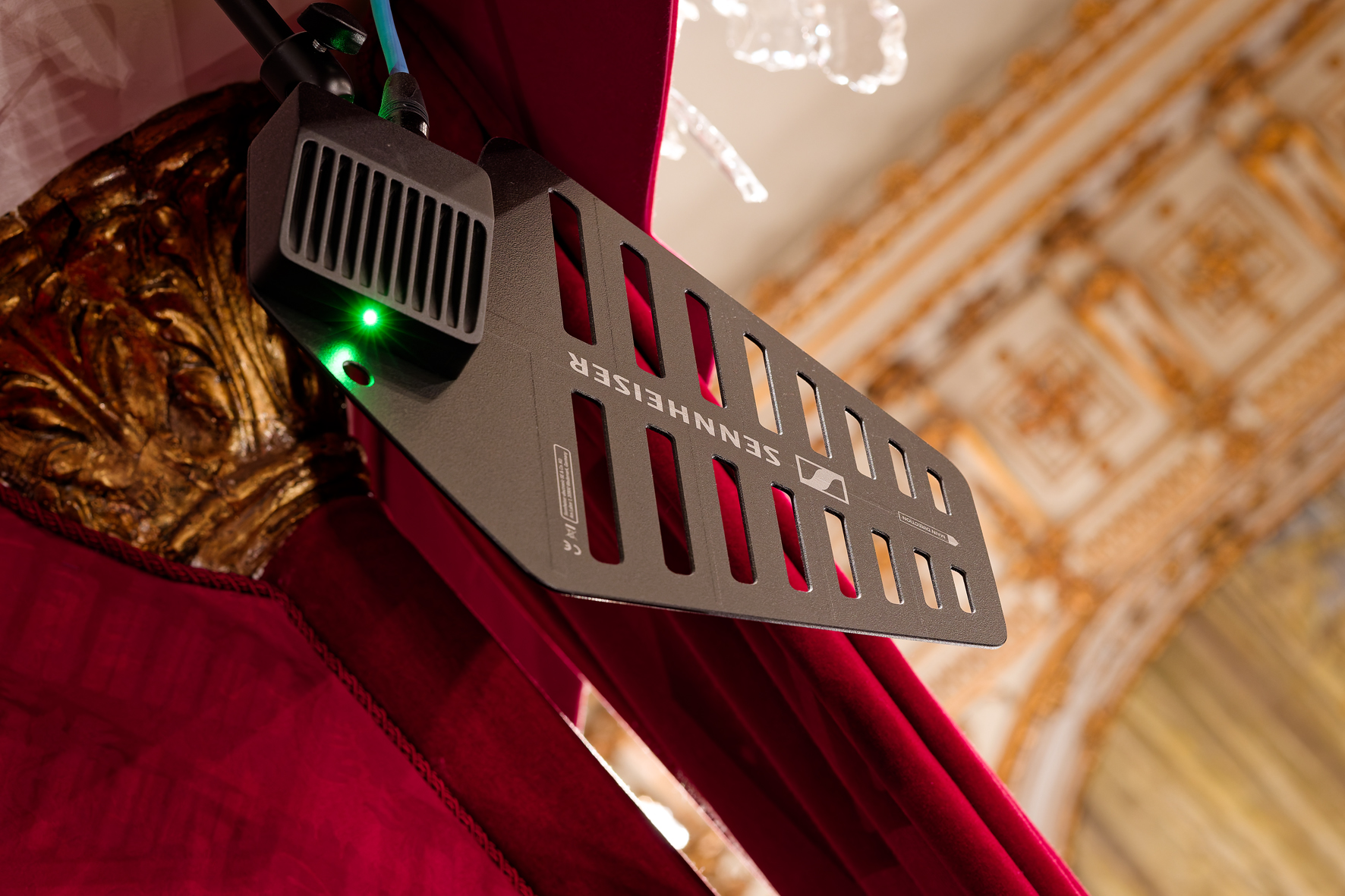
In the auditorium, the second balcony is equipped not only with Spectera DAD antennas but also with two active Sennheiser AD 3700 directional antennas. These are assigned to three Sennheiser EM 6000 two-channel receivers and a proven Sennheiser EM 1046 mainframe with eight slot-in receivers. “We mainly use the EM 1046 with plug-on transmitters, and these have always served us well in a variety of situations,” Thomas Haas explains. “They can simply be plugged on to conventional microphones and provide 48V phantom power. That is incredibly convenient, and we would really like to see SKP plug-on transmitters like these become an additional feature of the Spectera ecosystem in the future.”

Smart handling: e-ink instead of sticky tape
A Spectera Base Station can control up to 64 audio links (32 inputs and 32 outputs) and uses up to two independent RF wideband channels instead of a large number of narrowband RF carriers. In the theatre’s current set-up, up to 24 SEK bodypacks communicate with the two Spectera Base Stations; two more bodypacks are kept as spares. A numbering system ensures that everything is well-organized, and the bodypacks are stored in a wooden organizer that is also marked with the respective numbers. Haas is full of praise for the continuously clearly legible e-ink displays, which eliminate the need to mark each bodypack using adhesive tape.
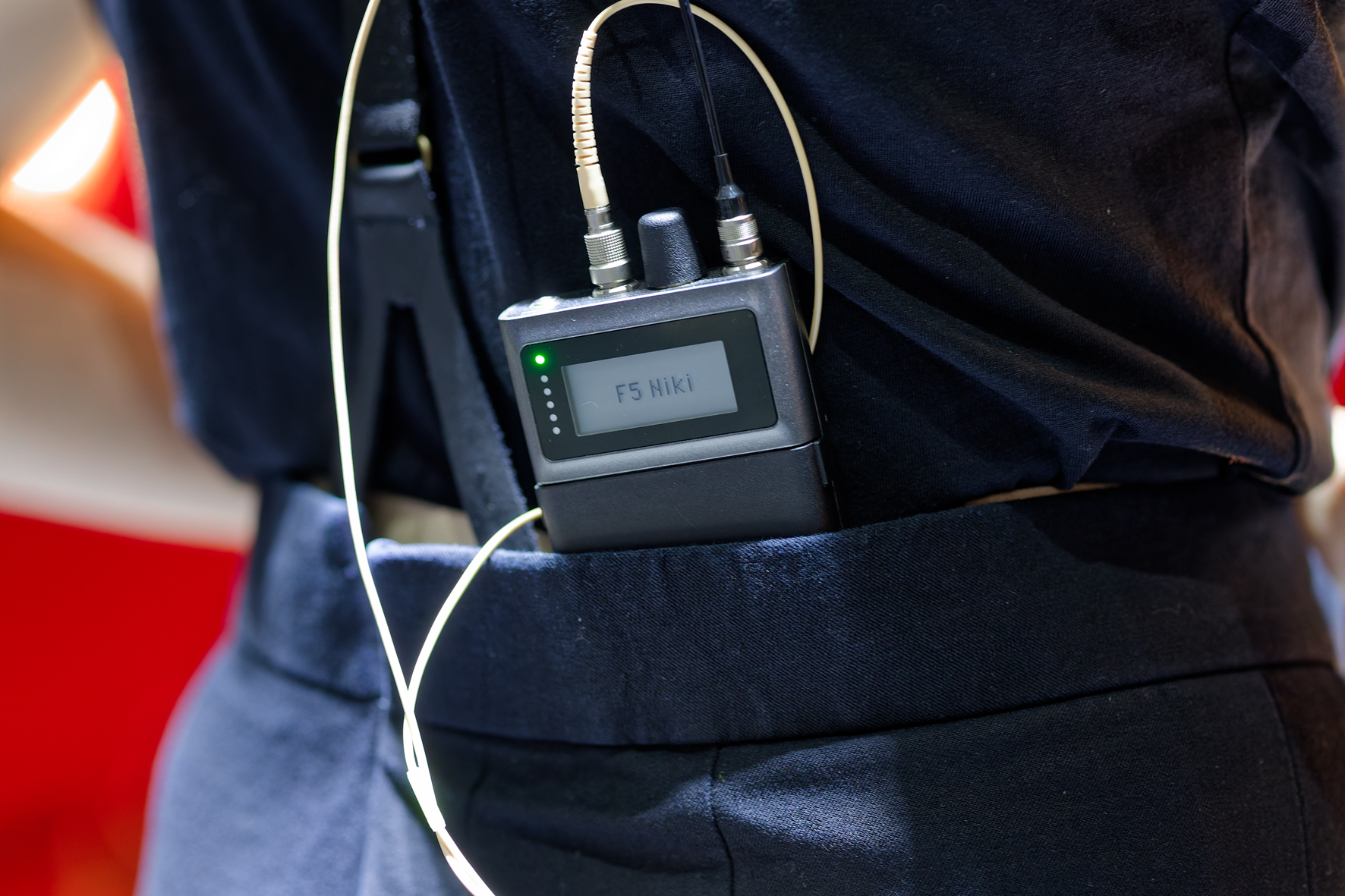
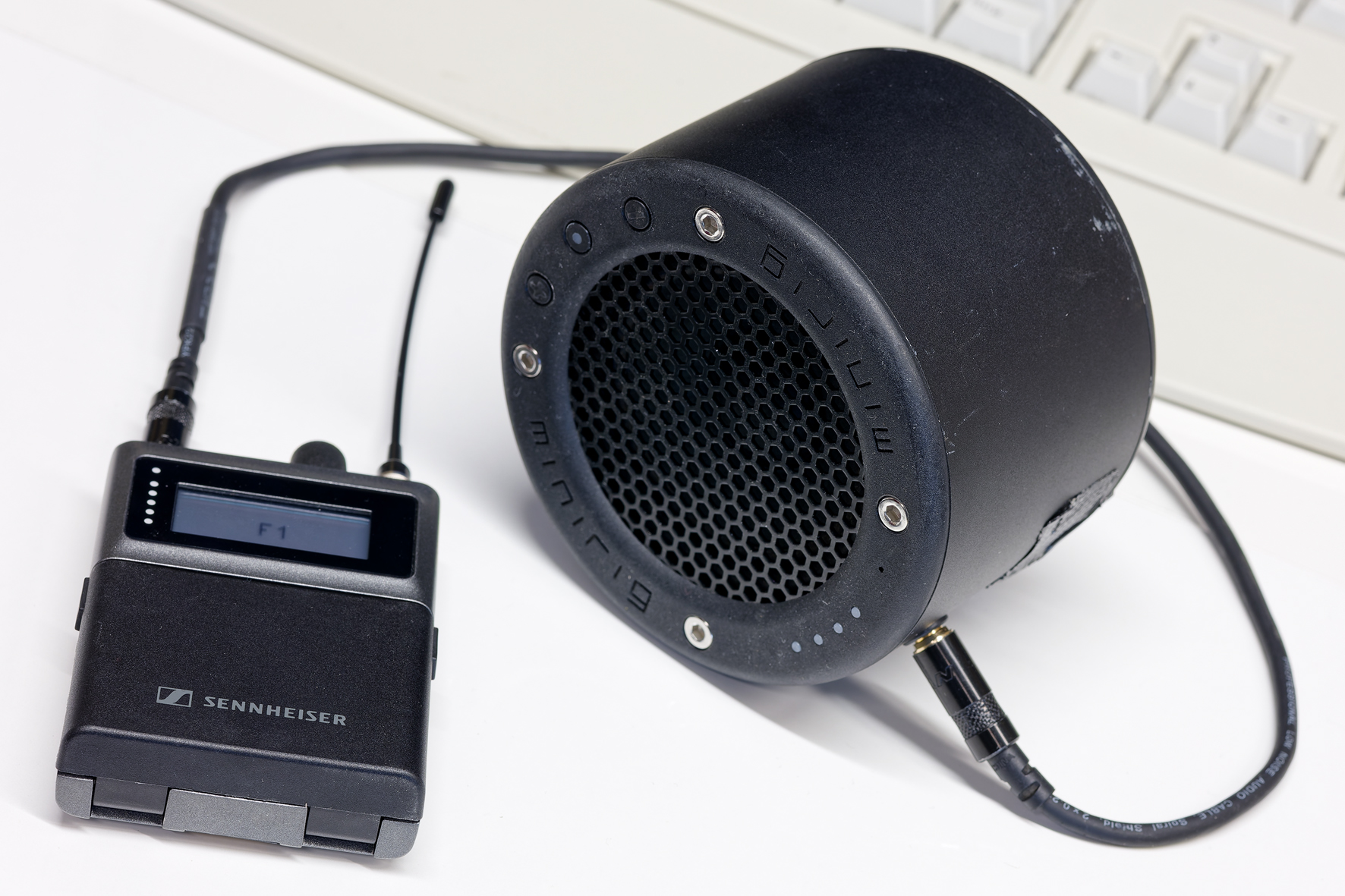
He also points out that the receiver function of the bidirectional Spectera SEK bodypacks is additionally used to provide audio signals to small active loudspeakers during certain performances. Concealed in the scenery, these can then be used as invisible sound sources. The BA 70 lithium-ion batteries in the bodypacks are recharged in L 6000 rack chargers with LM 6070 modules and, to avoid any risks, they are also recharged during the break between rehearsal and the evening performance.
No more wireless stress: just set and forget!
Two Spectera Base Stations are supplied with power both directly from the mains and via a UPS to create a redundant system. They are operated in the UHF band in 8 MHz-wide frequency blocks with centre frequencies of 474, 482 and 562 MHz. According to Hornich, the frequency situation at the venue is relatively relaxed: “Setting up wireless systems in the centre of Vienna only really becomes stressful about 700 metres away, near the City Hall,” says the experienced sound engineer. “We use frequency bands that are permanently allocated to our theatre and we don’t change the transmission frequencies, which means that we don’t need to re-scan the RF environment every day.”
The option to transmit Mic/Line audio signals in the PCM format (‘Raw’ or ‘Raw Low Latency’ Audio Link Modes) is not usually used: “We generally use “Live” mode with the SeDAC Audio Codec and Extended Range for both the transmitting and receiving function,” Haas explains. “The latency of 1.6 milliseconds is absolutely fine. At the moment, we have 12 microphone signals and four in-ear channels for each Base Station, although that doesn’t always have to be the case. We can adapt the settings to suit the production if different wireless parameters are required. The Spectera Base Stations are directly integrated into our Dante network via the primary and secondary connections. The sample rate is 48 kHz.”

Reliability through expertise
“Looking back, there was certainly a bit of risk involved in installing a completely new wireless system in the summer of 2025,” Hornich admits. “But we had expert support on hand, so we didn’t really have any serious concerns – especially because Spectera has already proven itself in Austria at the ‘Woodstock of Brass Music’ festival, and during ORF’s ‘Dancing Stars’ TV series.”
Raimund Hornich and Thomas Haas were provided with support for the wireless systems by Florian Fuchs (Sennheiser Sales Manager Professional Audio), Volker Schmitt (Sennheiser Manager Technical Application Engineering) and Gerhard Vonwald (Wireless Audio Support). TSAMM AG, led by Mario Reithofer, took on the role of integrator.
Groundbreaking solution for the Josefstadt
“The Sennheiser Spectera wideband wireless systems are a decisive step in the right direction for us,” is Hornich’s conclusion around a year after the systems were installed. “We have already received a lot of enquiries from interested colleagues, and from the audio and stage associations ÖTMV and OETHG. Unfortunately, I can’t make a direct comparison with the sound of the wireless system that we used to have in the theatre because we not only installed the new wireless systems, we’ve also installed new loudspeakers and power amplifiers and changed the mixing console, and the audio signal path is now completely digital, all the way from the microphones to the power amplifiers.”
Hornich is eagerly awaiting the launch of the Spectera SKM handheld transmitters: “I can’t wait to get my hands on them!” he says with a grin. “And the new battery packs that have already been announced, which offer even better performance, are also interesting for our theatre, for example when we have particularly long shows. My personal wish list also includes simpler transmitters without IEM functionality as an addition to the bidirectional SEK bodypacks. Ideally, these would be particularly compact and about the same size as the ever-popular Sennheiser SK 6212 mini bodypack transmitter.”
Uncompromising performance: “Absolutely the right choice!”
After hundreds of successful performances, Hornich is entirely convinced by the benefits of Sennheiser’s WMAS technology: “The Spectera wideband system is absolutely reliable. Ever since it was installed, there have been no unpleasant surprises. The rugged SEK bodypacks also fulfil the demands of continuous everyday use in the theatre without any compromises. All in all, having used them for a year now, we are completely satisfied. The Sennheiser Spectera ecosystem is absolutely the right choice for our requirements!”
A Vienna institution: the Theater in der Josefstadt
The Theater in der Josefstadt (www.josefstadt.org) is recognised as Vienna’s oldest continuously operating playhouse and presents itself as an extremely vibrant landmark in the cultural landscape that combines tradition and modernity in the heart of the city. It was founded in 1788 as a modest suburban venue attached to the tavern “Zum goldenen Strauß” with the aim of boosting business through theatre performances. Soon afterwards, in 1822, its popularity led to the construction of a new building to accommodate larger audiences due to the great demand. It was inaugurated with a performance of Beethoven’s overture ‘Die Weihe des Hauses” (The Consecration of the House) – conducted by the composer himself. Ferdinand Raimund and Johann Nestroy performed here, and Johann Strauß was one of the conductors.
The theatre saw a significant transformation in 1924 when Max Reinhardt took over as manager and oversaw a major modernisation of the venue. Under his leadership, “the Josefstadt” became one of Europe’s leading venues for classic plays, modern drama and comedies. The ceremonial re-opening of the renovated theatre took place on 1 April 1924 with Carlo Goldoni’s “Der Diener zweier Herren“ (The Servant of Two Masters), directed by Reinhardt.
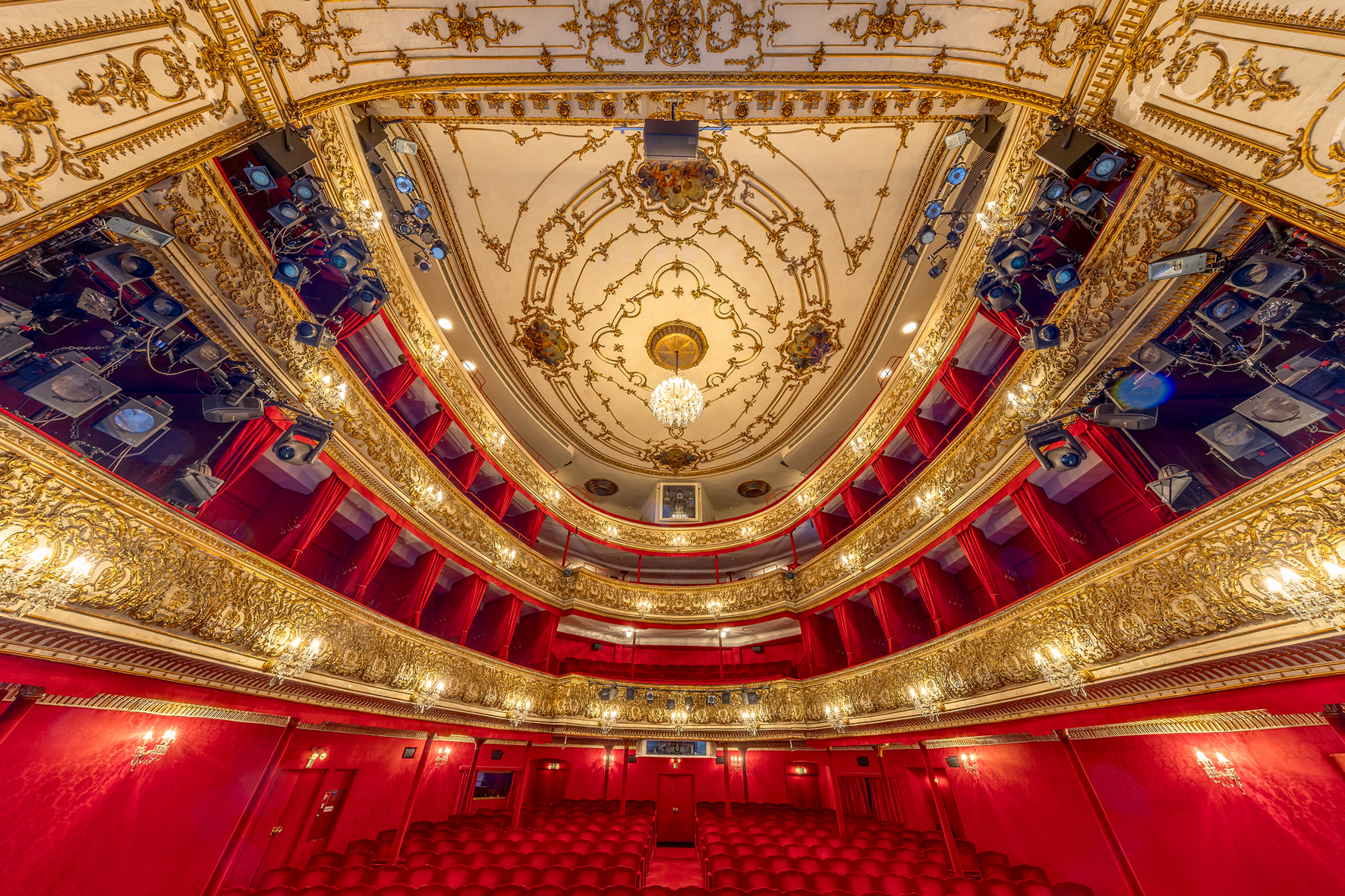
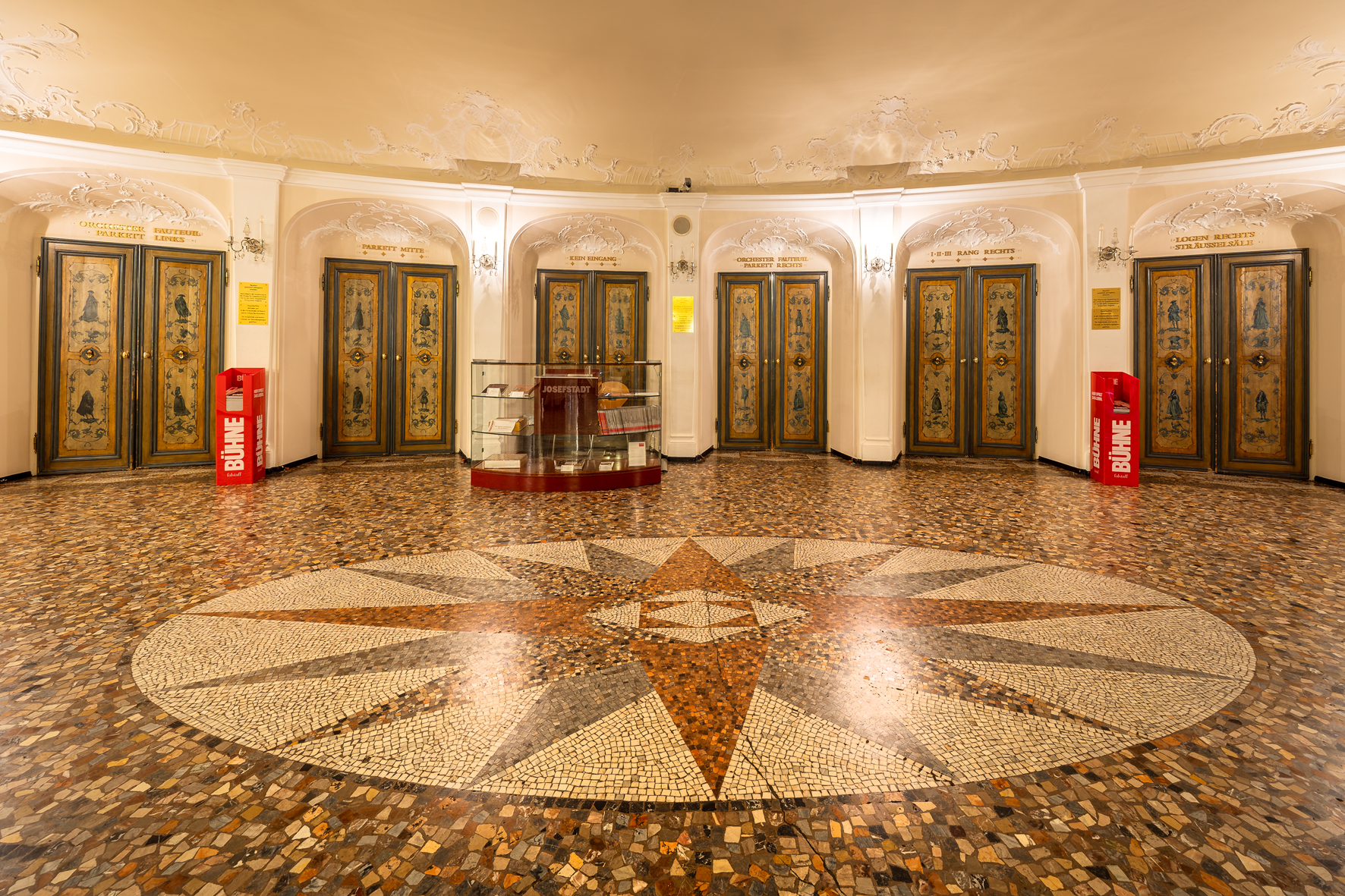
The theatre’s current architecture, with a façade embellished with figures of angels and with elegant reception rooms such as the Star Foyer (shown below) and the Sträußelsäle ballrooms, is the result of Reinhardt’s modernisation. Even today, the baroque-inspired auditorium, with its red décor and golden stucco detailing, exudes festive elegance while also benefiting from “dry” acoustics that enhance speech intelligibility. Plays such as Arthur Schnitzler’s “Das weite Land” (The Vast Domain) are performed without electro-acoustic amplification and rely simply on the actors’ voices. The 16-metre-high auditorium with boxes, three balconies and stalls, has 562 seats and ten standing spaces. In 2024, the theatre celebrated its anniversary entitled “100 Years of Max Reinhardt’s Josefstadt”.
(Ends)
The images accompanying this media release, plus additional images, can be downloaded as high-resolution JPEGs or as TIFF files with a particularly high resolution. The photo of the rack was created by combining the two individual images, no. 15 and no. 18, of the rack.
Theater in der Josefstadt - Spectera_English version.docx
DOCX - 4.3 Mb
Theater in der Josefstadt - Spectera_English version.pdf
PDF - 1.5 Mb