Tone Art puts its trust in Sennheiser Spectera across Danish theatre productions

From Moulin Rouge to Evita, Spectera has cut setup time, simplified touring and won over a once-sceptical team
Wedemark, 13 October 2026 – In the four years since it was formed, Danish theatre sound design and production company, Tone Art, has made a big impact on the country’s theatrical productions by combining technical expertise with state-of-the-art equipment. One of their latest technical upgrades is Sennheiser’s Spectera ecosystem which, they say, has been instrumental in helping the team create consistent, flexible setups that no longer need repeated reconfiguration between tours.
“Compared to more traditional markets, production companies in Denmark have flexibility to innovate with technology in stage performance,” says Tone Art co-founder, Tim Høyer. “We also have shorter production periods and a smaller economy, but we’re still intent on doing large-scale shows. So, instead of trying to keep the culture of ‘this is how we’ve been doing it for 30 years’, we keep evolving and pushing the technology. We love to just see what happens, because that’s how we can keep moving forward.”
However, Høyer does admit that he was slightly sceptical about Spectera. “It seemed there was something magic going on and it was too good to be true,” he says. “Of course, we wanted to test it, but we were also concerned that it might have problems.”
%20%2BJeppe%20(r).jpg)
With the help of Jonas Næsby, Manager, Technical Application Engineering EMEA at Sennheiser, the team tested Spectera on the Moulin Rouge production at the Copenhagen Opera House. “We didn’t have any issues at all,” Høyer recalls. “It was just working from the get-go. It was hard to believe, and we’ve been using it ever since.”
“All the problems we would normally face in situations where we use that much wireless, in the Opera House or anywhere else, were gone. And that was kind of scary,” adds Tone Art’s Jeppe Søndergaard.
Høyer notes that in his experience, when actors try new equipment, a new bodypack or microphone, they have concerns. “But having just one bodypack made it the easiest swap we’ve ever done,” he says. “The actors love the fact that you can control the volume, lock it, and change settings from the software. There are a lot of things that just fit with what we’re doing. We haven’t used any other system for the last year and a half – every musical, around seven, has been on Spectera.”
Along with the single bodypack, the team have found the saving on rack space with the Spectera Base Station a bonus, but even more so is having a workflow that is easily changeable. “If we use eight bodypacks or 30, our entire system and infrastructure can be the same,” Søndergaard notes. “We don’t need to make lots of changes because, just in our normal setup, we can squeeze in two more units, and then we have it all on a Mac. It’s just so much easier. Before if we needed 20 in-ear monitors, then 24, that would be a big difference.”
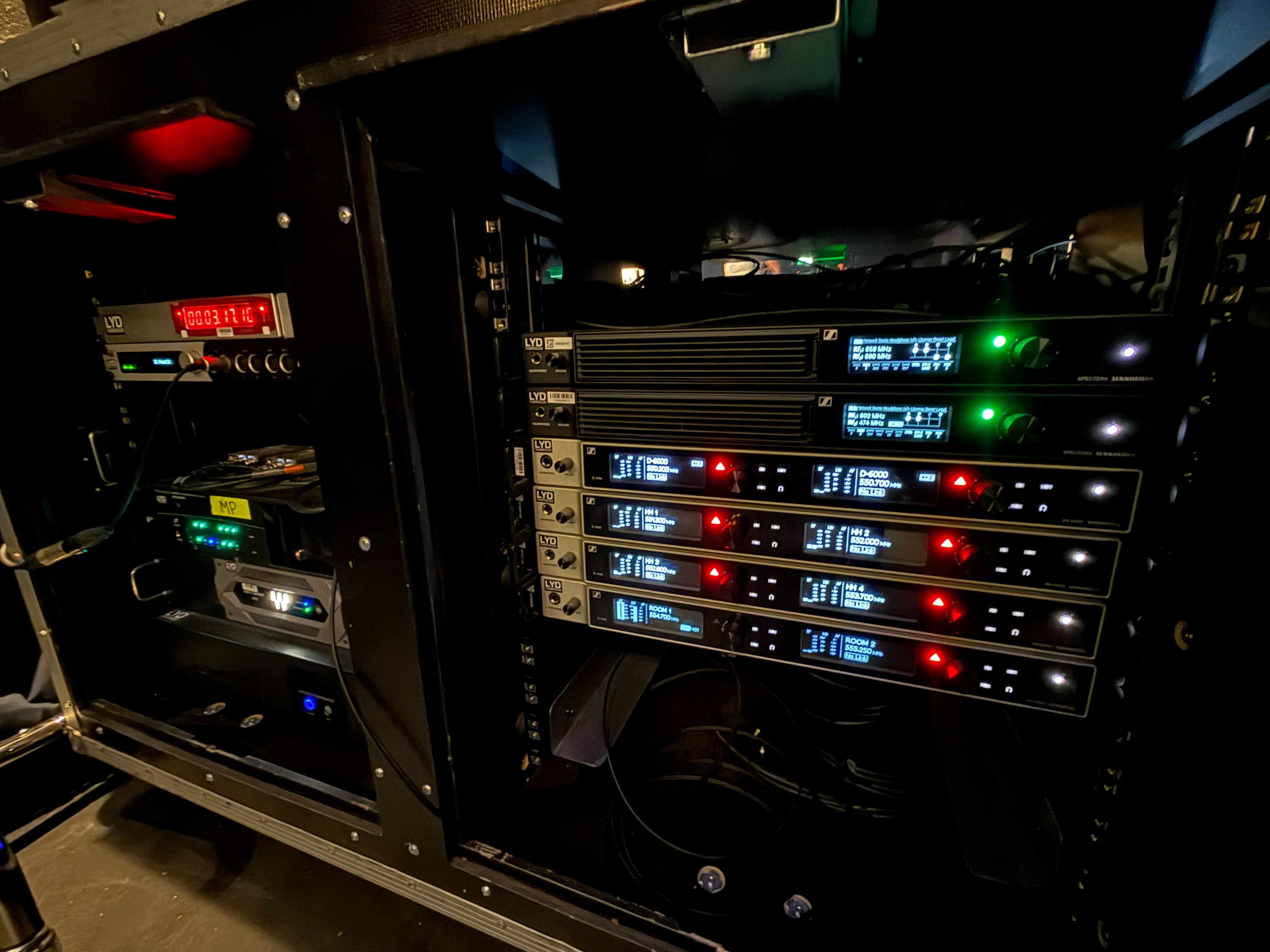
The company must also consider EU regulations about power consumption. “We have to keep in mind that we need to reduce how much energy we use,” says Høyer. “Spectera makes a big difference to that. And then there are small things like network infrastructure; you don’t have to allocate 40 IP addresses for in-ears and different brands. You can allocate five and you will know that you are covered with that. There are a lot of little things that just make life easier. And it sounds good.”
Søndergaard adds that there is no colouration with Spectera: “It just comes through the system as it should sound and you can trust in what you’re hearing; if you connect your headphones to the sound desk, it will be the same as what the actors hear on stage.”
Time saving is significant, with around half a day saved just on labeling, scanning, setting up and syncing beltpacks, with the latest Spectera WebUI software version also making it easier to copy settings.
“But the biggest time saving is when it’s on tour,” notes Søndergaard. “We can simply open the software, plot in the areas we need and it’s ready to go. That’s a lot of manpower and hours saved every time we move a show, and a lot of headaches removed. It used to be that the lead actors got the best frequencies, and then we’d sort out the next one and the next one. Whereas with Spectera, it works really well for everyone.
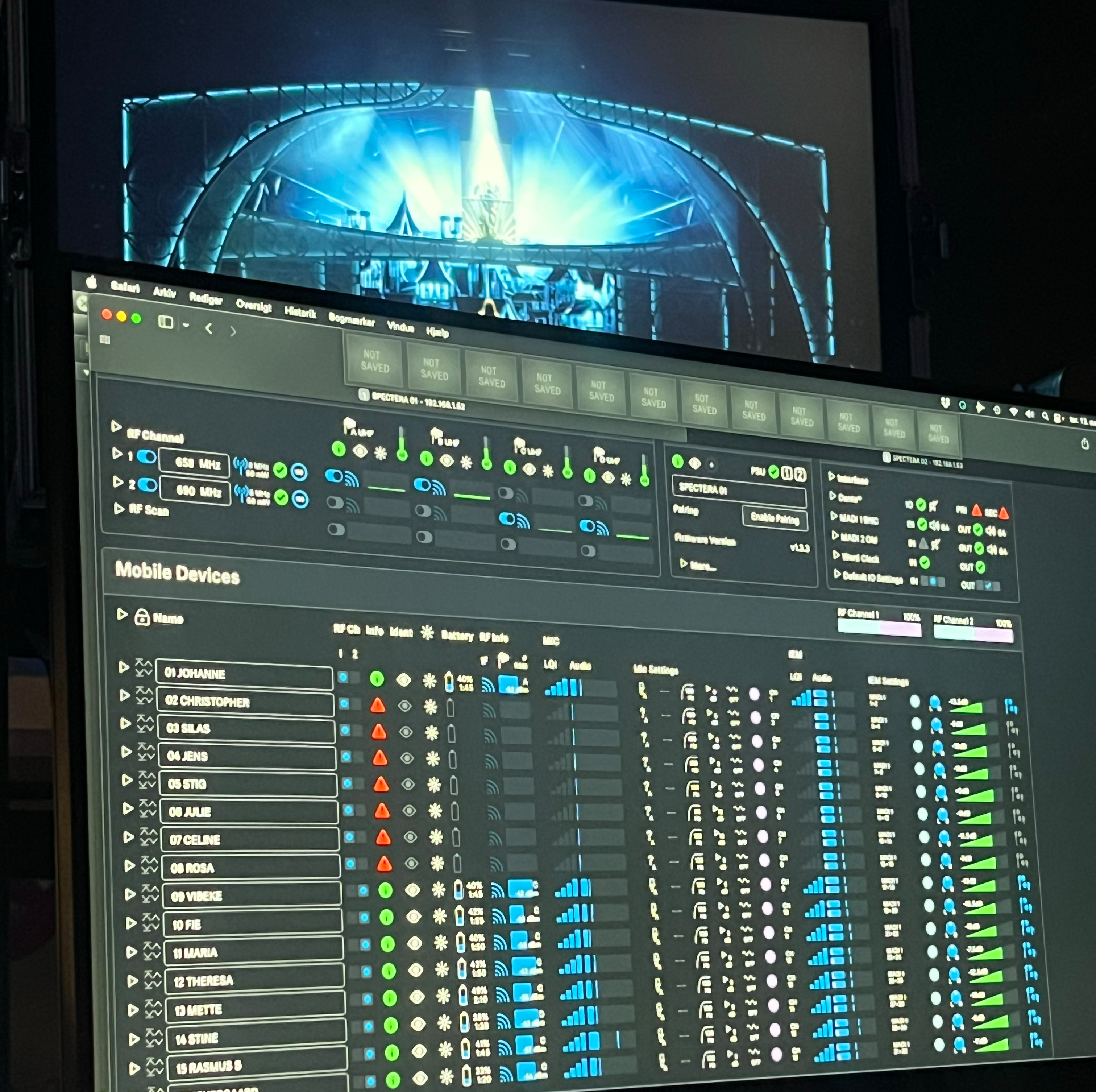
“Our biggest learning curve was not looking for flaws, believing in the system, and trusting that it works. With our old system, you had to think about everything. With Spectera, you have all the options you need in the software and it’s incredibly easy.”
Tone Art is doing a show this autumn where they have some in-house wireless, and need to hire more. The set design is complicated: there is not sufficient room for enough speakers, and it is also a fully composed show. With up to 40 actors on in-ears, Spectera offers savings on both space and cost.
“With Spectera you can rent a system for a lesser price and still get the in-ear part as well, so it seems like a no-brainer,” says Høyer. “I really believe there’s no other system like it.”
Tone Art’s close working relationship with Sennheiser extends beyond the technology itself. “We have really good communication with Jonas,” says Søndergaard. “I have a feeling that the Sennheiser team listens when we give feedback, and that’s really nice.”
For Høyer, that spirit of collaboration feeds into a wider ambition for how Tone Art operates. “A lot of sound designers and companies around the world work by themselves, bringing in associates production by production,” he explains. “Our dream is to build a team of people with different skills and experience, so we can bounce ideas off each other and keep pace with how other industries are innovating, not just in theatre. It feels like our part of the business moves slightly less quickly than the rest of the private sector, and we’re really trying to change that.”
That ambition is as much about looking after the people behind the productions as the productions themselves. “If you work in theatre, it can feel like make or break; your life is dictated by a production, and maybe you won’t see your kids for a month and a half because you’re stuck in rehearsals,” Høyer says. “We’re trying to build a space where people can actually take a day off and be covered by someone who knows what they’re doing, because we have certain standards about setups and programming. Work shouldn’t feel like life or death.”
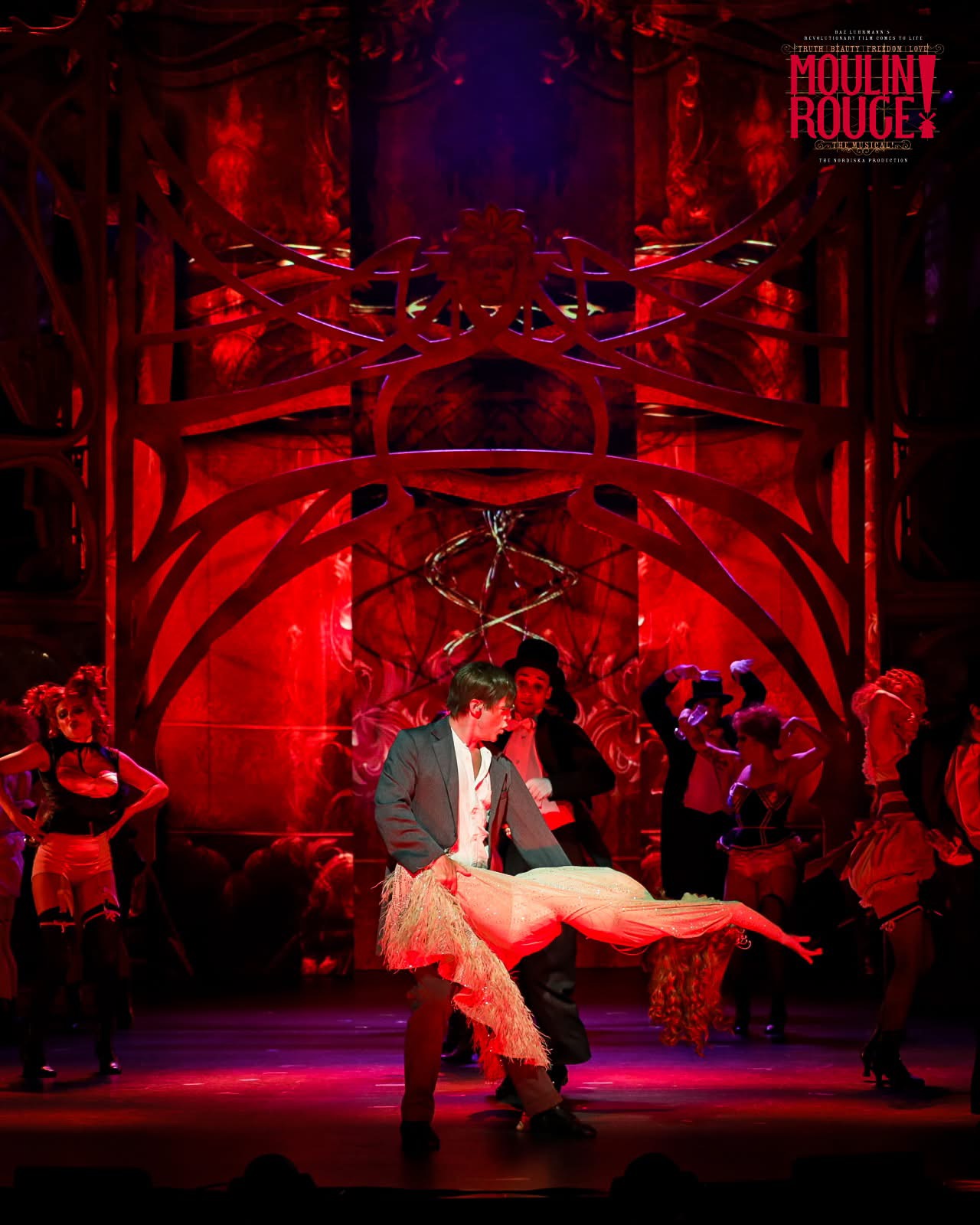
Spectera has now been the wireless system of choice across Tone Art’s entire slate of musicals for the past year and a half, from Moulin Rouge at the Royal Opera House in Copenhagen to Østre Gasværk’s De Vilde Kaniner. The system will continue to underpin the company’s work through the rest of 2026, including Lion Entertainment’s Tina The Musical and a production of Evita at the Royal Danish Theatre which starts in November.
For a company built on pushing technology forward, Spectera has become more than just another piece of kit, it’s part of the foundation Tone Art is now building the rest of its business around, from how it runs a show to how it looks after the people running it.
(Ends)
The high-resolution images accompanying this media release can be downloaded here.
Sennheiser_Tone_Art_Spectera.docx
DOCX - 3.5 Mb
Sennheiser_Tone_Art_Spectera.pdf
PDF - 756 Kb

Jacqueline Gusmag
Global PR & Influencer Manager, Sennheiser electronic SE & Co. KG


