A career completely self-tuned: How FOH engineer and production manager James Butera developed his sonic and career path
26 March 2026
James Butera never studied anything related to audio. Instead, he built his own curriculum, which included days and nights behind every conceivable console. Today, musical directors, artists, and tour managers appreciate the vibe, sovereignty, and reliability he brings to arena tours, festivals, and concerts.
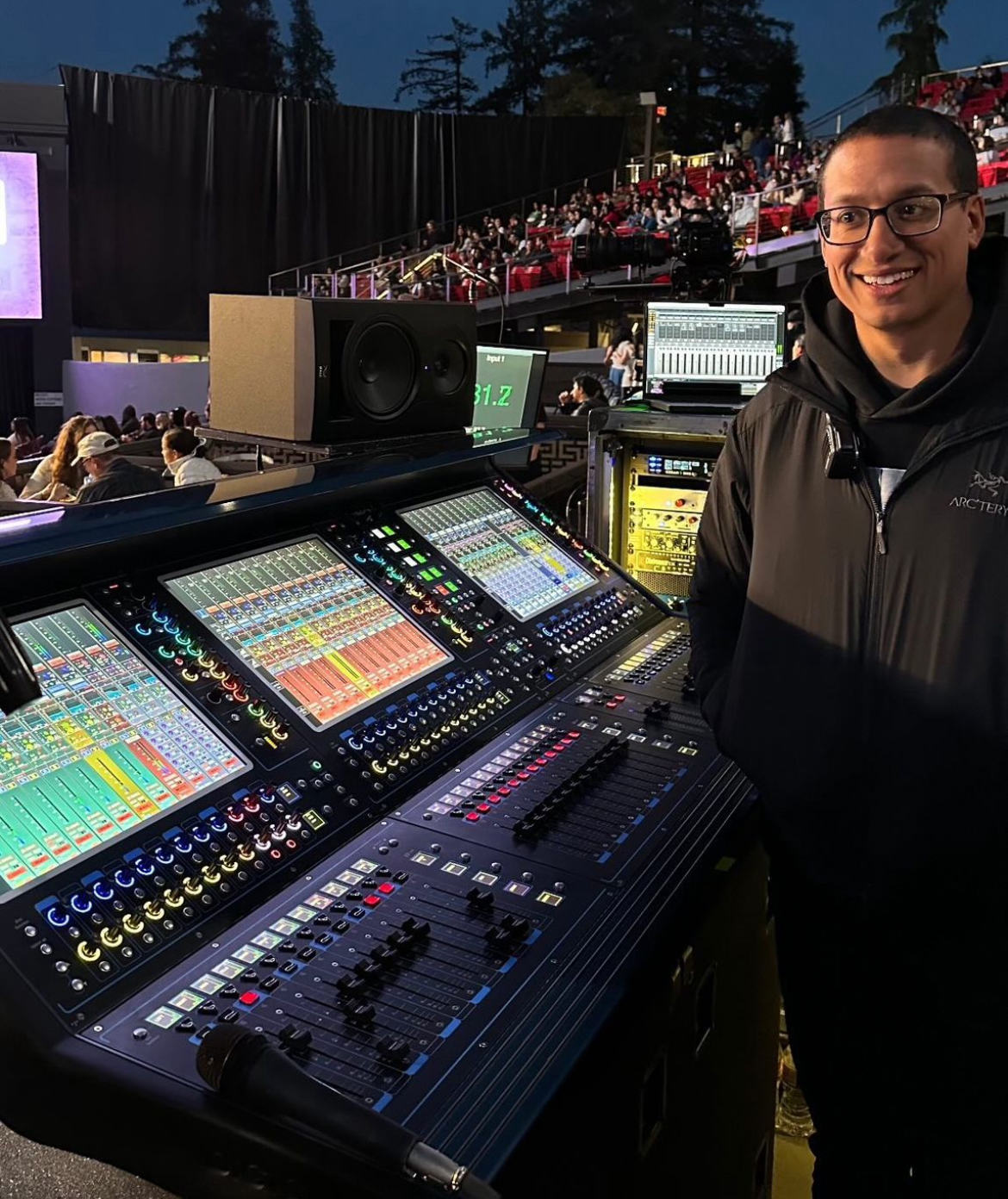
(Image courtesy of James Butera)
Tracing his career path, James laughs: “There’s no curriculum or two-step program for how this industry works, and it’s really fun to see all the connections we all have to each other. Our industry is so much about the relationships you build, about trust, and even more: about strange coincidences and timing you cannot actually plan for.”
The Training Ground: Late for Lunch
Coincidence number one happened to middle-school James, who grew up drumming in his private school chapel service in Texas. One Friday, one of the audio guys was late and he was asked to bring some of the microphones. Then he saw an old Yamaha console. “And the minute I saw it, I was like: Well, this is more intriguing than a drum set. It all started from someone running late for lunch and me going to grab the mics, honestly.”
Get Yourself a Training Ground
James underlines the crucial role of growing up mixing Sundays at church: “How I critically listen and how I develop a mix really came from working full-time at the church after high school. I mean, we were actually one of the very first DigiDesign D-Show owners, serial number 187, revision A. So, Sundays would happen, I would record, and then I would spend a few hours Monday, Tuesday, Wednesday virtual sound-checking and developing a mix process. But also… you know, I had the freedom to test plugins, test different audio routing schemes, practice time-aligning the PA once a week. Zero it all out and then redo it. I think that really gave me the freedom to develop who I am behind the console, without a musical director or an artist manager standing over my shoulder ready to fire me.”
After school, James started working for local vendors and rental companies. “That developed me as an audio systems engineer: deploying PAs, going on tour, testing things. My time at the school’s church services and freelancing for local companies collectively helped make me who I am today as an audio person in general.”
The Pioneer That Is Robert Scovill
In addition, James early on read every Live Sound and FOH-related magazine he could find. Around 2005, in the early days of internet forums, there came Robert Scovill: “He is probably the greatest teacher our industry has ever had. He was the first one who really pioneered webinars and online videos where he not only talked about it but showed you his way and let you hear what he was doing.” And then? “Anything I would read or watch, or even get told about, it was like: OK, Monday morning rolls around… let’s go try it and put it into practice.” Mixing local festivals and for friends’ bands around town were perfect playgrounds: “Let me build a show file and try some of those techniques or miking approaches. It was so invaluable, and I’m so thankful for that time because it allowed me to try things and make mistakes.”
Two Key Takeaways
Asked about the most valuable essence of those early years, James underlines two key elements. First: “As far as self-education and the mixing process, nowadays you can do a lot of that at home, on your own, self-taught. Because of how far live sound and the consoles have come, you can use many of the same tools you use at home or in a studio in live situations as well, whether that’s analog hardware or plugin based. Creating multiple groups and bussing those into a band group? That can all be done in a DAW of your choice. Will it sound exactly the same as summing through a live console? No, of course not. But the process and structure will teach you the same base layer and groundwork.”
Not Cool, Not Flashy, Not Sexy: Do Reps in Not So Great Situations
Second: “In any city you’re in, find a local audio company. The system side of live sound is hugely important and often neglected because it’s not the flashy position everyone sees. Unless you’re at a certain level, you’re not going to have a systems engineer with you to hold your hand, take care of the system, get it where it needs to be, and then turn it over to you to just push faders.”
(Image courtesy of James Butera)
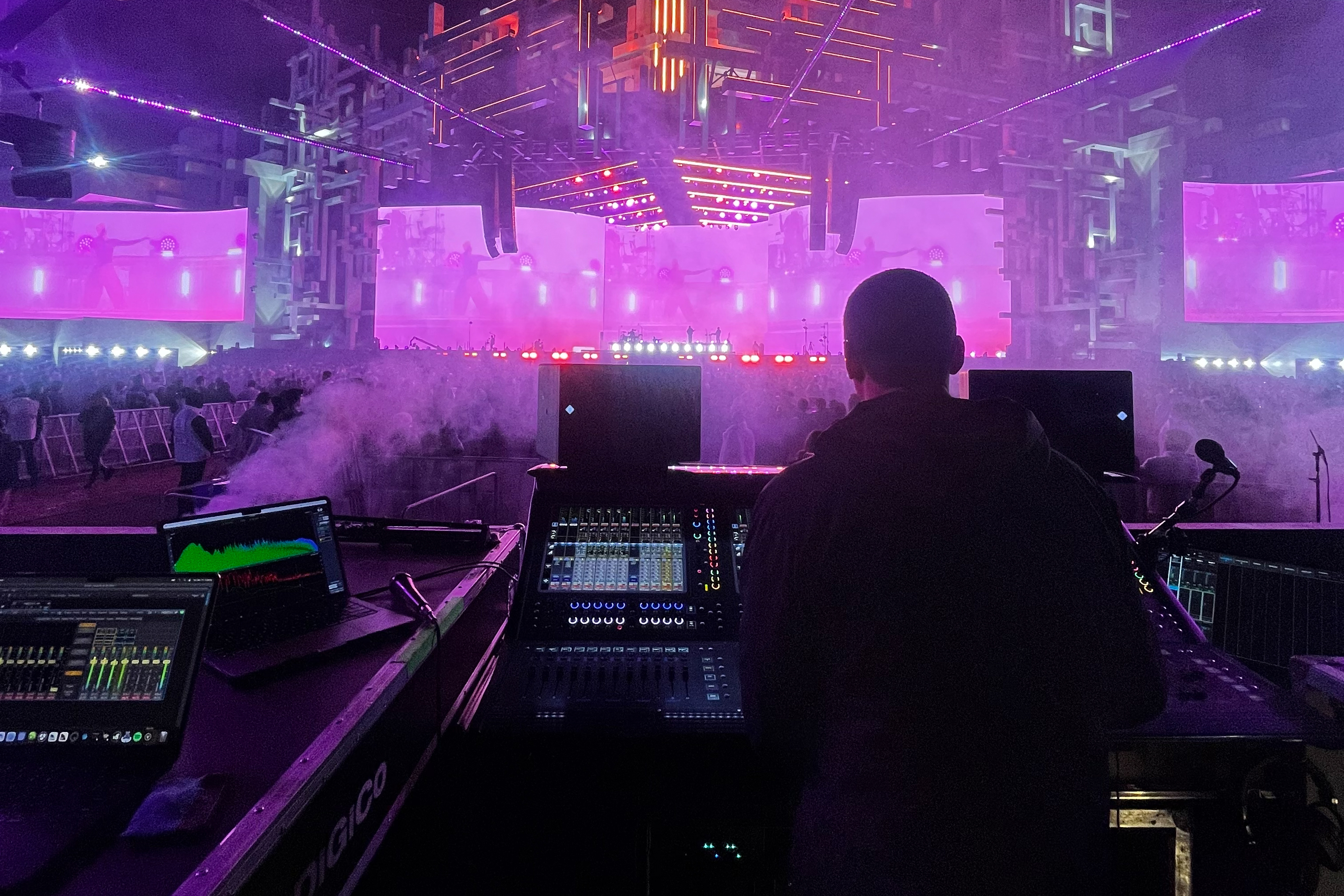
He has seen many engineers struggle: “What comes out of their console sounds great, but when they walk into a venue or festival, they have zero knowledge of the PA. They have no idea how to address a large-scale sound system, verify time alignment, and then tune the system spectrally and in level so their console output translates.”
“It’s a skill you can teach to some degree, but you need time. You can go to all the L-Acoustics, d&b, or Adamson classes you want, but at the end of the day, there are things you can do in real life that prediction software says you can’t or shouldn’t do. Only years of deploying a PA or mixing on it in every possible environment will teach you that you can.”
“You have to put in the reps, whether it’s mixing, dealing with sound systems, or system optimization. At some point it has to move from classroom to real life. You need reps in crappy situations: not enough time, pouring rain, not enough boxes, not enough processing power. You show up and nothing’s right. Or half the stuff is missing.”
Working with a local vendor helps here too: “That’s where you get the opportunity to sit behind most consoles. Even the same brands might have different layouts. Train muscle memory. It helps when the lights are low and panic and chaos set in. It’s not cool or sexy. But you’ll be the one who knows what you’re grabbing in the dark.”
Finding Your Sonic Voice: Don’t Just Copy. Become Your Own Original
Another crucial element for James is finding your personal style: not copying but becoming original. “Find your sonic voice. Define who you are as a mixer. We’ve probably all gone through a lot of gear. If you know me, I buy all my outboard gear and I can’t stop trying things. You might read an article or watch a video and think: let’s rent or buy everything that person uses. But that might not work for you, your situation, or how you hear sound.”
“I’ve tested and rented so many of outboard toys. A friend might recommend something that they love and I can’t stand it. My workflow and console routing might not work, or I might not need what it offers. Moving on.” On the other hand: “I remember reading an article by Toby Francis about external summing, so I grabbed some gear and started testing and mixing into it to see if it complemented my workflow.”
That Professional Habit Once You Get Hired
James also underlines a typical professional habit: “If you get hired, download every song and album you can find and put it on shuffle. You develop a sense of the artist, their sonic landscape and vibe. Vocal treatments, effects, how the bass sits. You’re learning their sonic fingerprint.” He also contacts the music director early: “I ask for a kind of cheat sheet, for BPMs, song keys, notes about solos or featured parts, LTC offsets, then take the time to build a show file. Talk with the MD and get their vision for the show and how they want it to sound and if you can, ask the artist as well. Discussing more than the input list ahead of time means you come in prepared. While the band is making noise, you’re not labeling or routing. You’re ready to start listening and not stuck with your head down.”
The Art of Listening to the Most Important Ears: Check Your Ego
Another key takeaway for James isn’t technical, but social and about feedback. “Maybe it’s the artist manager or assistant. Someone better with Excel than audio. Or someone from the band’s wider circle. Our audience isn’t made up of Berkeley graduates in all 15,000 seats. They’re normal people who know the music of their favorite band from playlists and listening to it on repeat.
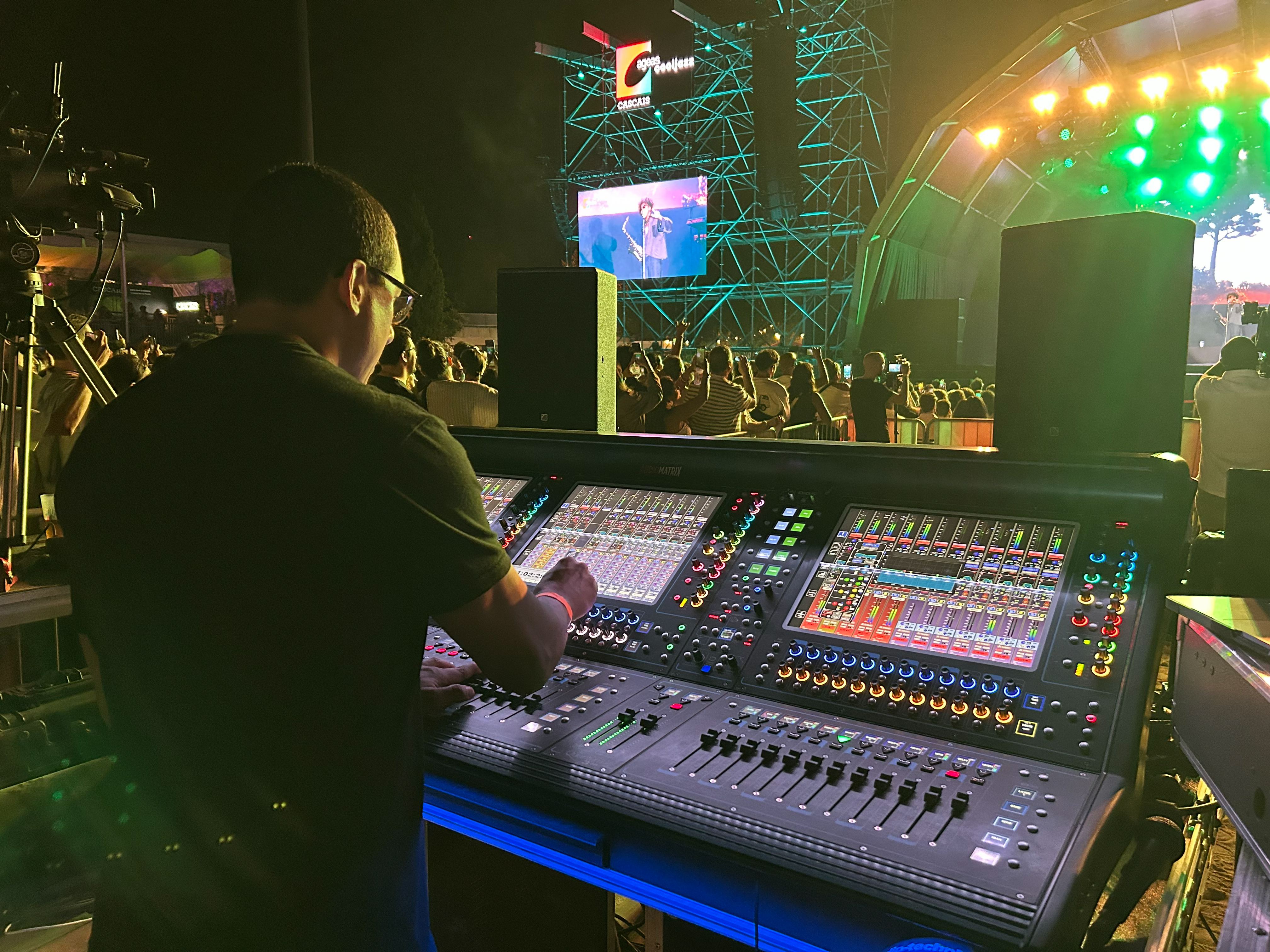
Check your ego. Ask yourself: what are they trying to convey by complaining or commenting? Pause. Maybe they’re right. Go reference the song again.” Even if nothing changes: “They see you as someone who listens. Audio guys have a reputation for attitude. Listening without a stink face or rebuttal wins more brownie points than nailing that vocal delay in that one chorus. It can be hard, but I promise: it’s worth it!”
(Image courtesy of James Butera)
Budget-Related: Treat Every Gig Like the Most Important Event. Ever.
Developing an individual style in other areas besides mixing is key for James, especially when it comes to excellence: “I have the habit of treating every gig like a sold-out arena show. I want to bring the best possible experience to every show whether it’s a sold-out arena or a private show inside a barn for a Silicon Valley CEO. I want artists to feel that it’s going to be the best possible, no matter what. Artists get accustomed to that. Artists also like excellence, they feel when you bring your best and when you are locked in. Everybody can push faders. Our art is more than pushing buttons and faders. We’re here to deliver confidence to the people that hire us and an unforgettable experience for the fans.”
About the Non-Nerdy, Non-Techy Side
Looking back, James laughs: “It’s crazy that a small church in Dallas – a night of worship where I connected with a guitar player because I loved his tone – helped steer everything. He happened to be Frank Ocean’s guitar player and recommended me to Frank’s producer Malay. The connections are so crucial, but you must have the skill and performance on demand when the call does come. Besides coincidence, another truth in our industry isn’t that different from others: relationships are key to success. You never know.”
(Ends)
The high-resolution images accompanying this media release can be downloaded here.
The Engineer's Path - James Butera.docx
DOCX - 4.1 Mb
The Engineer's Path - James Butera.pdf
PDF - 426 Kb